Category: Services

Fees, theses and project updates

Last week brought the news that, in England, people beginning nursing degrees from the 2017-18 academic year will need to take out student loans to cover the cost of their tuition fees. The cap on student numbers will also be removed. The Council of Deans of Health broadly supports this move, having previously argued for change. One of the things it points out is that current funding for students (via the agreement of the benchmark price) does not cover the real costs of educating new nurses. The Royal College of Nursing, on the other hand, is concerned that last week’s announcement prepares to break the connection between the NHS and financial support for student nurses, and simultaneously risks making nursing a less attractive career option. This concern particularly relates to mature students and those contemplating a second degree, for some of whom the prospect of additional debt may be exceptionally unappealing. As a nurse academic in Wales I wait with interest to see what policy on fees will emerge from the Welsh Government.

In other news, I find myself engaged in a prolonged period of doctoral student activity. I’ve examined a number of theses in and out of Cardiff in recent months, and have sat with students during their vivas as either supervisor or independent chair. This term has been particularly packed. Plenty of writing has also been taking place: papers and reports are being written from COCAPP, RiSC and Plan4Recovery, and from completed theses I have helped to supervise. Data generation in COCAPP-A has almost concluded, and new research ideas are taking shape. Exciting times, if a little frenetic. 

Initiatives crisis

My esteemed friend and colleague Professor Alan Simpson draws my attention this afternoon to this piece on the NHS Networks website, which points to a catastrophic collapse in the availability of NHS initiatives. Here’s a snippet:

The report, No More Burning Platforms: We’re Out of Job, produced by a leading think tank, paints a disturbing picture of a future health service where hundreds of millions of pounds a year currently devoted to transformation programmes, innovation schemes and reports that no one reads could be siphoned off by officials to fund wasteful and inefficient “frontline” services such as hospital A&E departments and GP surgeries.

As I type, NHS executives will be frantically planning emergency fishing trips to poach the initiatives of other countries. Let’s hope they’re able to replenish our dwindling supplies of TLAs* at the same time.

*TLAs: three-letter acronyms. Like SMI, CBT and ACT. These should never be confused with their four-letter cousins, like CMHT, DTOC and CRHT, which are quite different. For more on this, see this earlier piece.

Risk for children and young people in mental health hospital

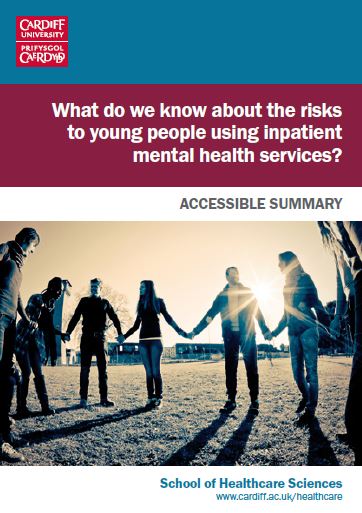
Over the last year or two I’ve used this blog to publicise information about the RiSC study, an evidence synthesis into ‘risk’ for young people in mental health hospital. We’ve now produced an accessible summary, outlining what we did in this project and what we found. For a copy, click the front cover of the summary reproduced below:

Public Uni

After finishing work next Thursday (October 15th 2015) I’ll be heading off to Chapter to take part in the 7th Public Uni. At Public Uni, which is organised by Marco Hauptmeier in the Cardiff Business School, academics get a ten minute opportunity to present their research to an assembled audience. I gather there is some retiring to the bar at some point in the evening, which seems very sensible.
Here’s the flyer for next week’s event: and what an eclectic bunch us five speakers are! In my slot the aim is to compress a history of mental health care, and a summary of where we are now, into 600 seconds of talking. What fun! For a taster of what I’m planning to say, here’s my summary:

Changing landscapeUntil the middle of the last century most formal mental health care was provided in hospitals. This changed with the emergence of community care. Dr Ben Hannigan, Reader in Mental Health Nursing in the School of Healthcare Sciences, explains how this change came about and discusses the people, policies and practices found within the system now.

Visiting Denmark

St Hans Hospital, Roskilde
I took the chance to indulge some professional interests during a just-finished summer trip to Denmark by paying a visit to the museum at St Hans Hospital in Roskilde

St Hans was founded in 1816, and is Denmark’s oldest psychiatric hospital. The grounds are pleasant, with local tourist information indicating they remain a popular place for Roskilde’s residents to take a stroll.

Straitjacket
Straitjacket, St Hans Hospital
The hospital, we learned, was once occupied by 2,000 inpatients. Around 200 beds remain and parts of the site are apparently scheduled for selling off; as in the UK, most mental health care in Denmark is now provided in the community. In the hospital’s museum we saw artwork, and exhibits which included a straitjacket and a restraining chair. How times and practices have changed.

Remains of Viking longboat, Roskilde Ship Museum
Changing subject at pace, here for anyone interested is a non-mental health related picture from Roskilde Ship Museum. The longboat is one of five ships deliberately scuttled, in the 11th century, in Roskilde Fjord (near a place called Skuldelev) to form a defence against attack. All five were found in the early 1960s, and came to be housed in the purpose-built museum we visited.

Roskilde Fjord
Roskilde Fjord
Modern Danes enjoy a high standard of living, invest in welfare and are amongst the happiest people in the world. They also do living history better than most, and at both the Ship Museum and the Ribe Viking Centre there was plenty of 8th-11th century skill and craftwork on display.

But how, I now ask, did the Vikings experience, recognise and respond to mental ill-health? A niche area of research indeed, for which a quick scan online turns up this paper. Alas, it sits behind a publisher’s paywall and is in a journal I cannot access through Cardiff University’s library subscriptions.

Now back at work, a busy few months beckon with ongoing research projects, new projects to develop and students to teach, supervise and assess as the 2015-16 academic year unfolds. I’ll hope to get back up to speed with this blog site as things progress. 

First COCAPP publication

COCAPP BMC protocol

Here’s a brief post to flag this week’s appearance of a first published paper from COCAPP. This is the study protocol, and can be found in BMC Psychiatry. Clicking the image above will take you directly to the gold open access PDF of the article.

Protocol publishing is a fairly new phenomenon. It encourages transparency, and in the case of health intervention studies is a way of meeting the registration and reporting standards which organisations like AllTrials are campaigning for. COCAPP has not been an intervention study, but publishing the protocol is still valuable for the purposes of openness. When findings are published at a later point, readers can also be given the briefest of summaries of the methods used coupled with a reference to the protocol paper for the full detail.

Making Hay

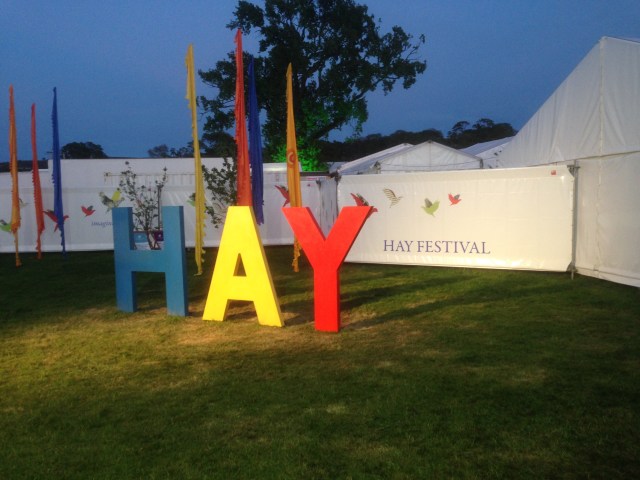
Hay Festival 2015

I’m back from the annual week-long trip to the Welsh Marches, taking in an eclectic mix of speakers at both the Hay and the newer How the Light Gets In festivals. The first of these has grown in size to the extent that, for some years, it has been located out-of-town in a field of marquees. I remember visiting when events took place in the local primary school. The second, much smaller, festival makes use of the Globe building supplemented with tents across two sites.

There was plenty on offer related to the field of mental health. Andrew Scull used images to support a tour through mental health services across time, and Mark Salter gave a lively account of the limits of biology. Richard Bentall, Dinesh Bhugra and Simon Baron-Cohen debated categorisation and diagnosis, concluding (in largely consensual style) that what we need is more public mental health, peer support and respect. David Healy continued his critique of the pharma industry.

This year the weather was kind, which always makes a difference. Travelling further north for a day, deep into Powys, took us to the Elan Valley and a fine walk in the hills.

Caban Coch dam
Carn Gafallt

Back at the festivals, I’m always impressed when natural scientists are able to convey difficult concepts in ways which are understandable to lay audiences. This is not easy, I would have thought, when the working language is that of mathematics. On this occasion I took the time to listen to a discussion on the physics of black holes, and was glad that I did.

Next week sees me back at work, with a new office giving views over Cardiff towards the Bristol Channel. Here’s a photo taken just before I headed off for my week away. Look hard enough and you can, just about, make out the sea.

Office view: Cardiff, then the Bristol Channel, and Somerset in the far distance

Risk in inpatient child and adolescent mental health services

This week our full report from the RiSC study, An evidence synthesis of risk identification, assessment and management for young people using tier 4 inpatient child and adolescent mental health services, has been published in Health Services and Delivery Research. This is in gold open access form, and is free to download and read.
Here’s our plain English summary:

In our two-part study we brought together evidence in the area of risk for young people admitted to mental health hospital. First, we searched two electronic databases, finding 124 articles. Most were concerned with clinical risks, such as the risks of suicide. Using diagrams we grouped these articles together under a number of themes.

Young people who had been inpatients in mental health hospital, carers, managers and professionals helped us prioritise the types of risk we should concentrate on in the second part of our study. Our top two priorities were the risks of dislocation and contagion. We used the word ‘dislocation’ to refer to the risks of being removed from normal life, of experiencing challenges to identity and of being stigmatised. We used it to refer to the risks to friendships and families, and to education. We used ‘contagion’ to refer to the risks of learning unhelpful behaviour and making unhelpful friendships.

We searched 17 databases and a large number of websites for evidence in these areas. We asked hospital staff to send us information on how they managed these risks and we searched journals and reference lists. We identified 40 items to include in our review and 20 policy and guidance documents. The quality of the studies varied. We grouped the evidence together under seven categories.

We found little evidence to guide practice. The risks of dislocation and contagion are important, but research is needed to inform how staff might identify, assess and manage them.

This has been an excellent project to work on: a great team, and some good engagement with young people and others with a shared interest in what we’ve been up to. Next up is an accessible summary, and some writing of articles. More to follow!

Spring election, and the politics of mental health

It hasn’t always been like this, but mental health is something which politicians now talk about. In the run-up to next week’s general election mental health has even featured in public appeals to voters. The Liberal Democrats have particularly campaigned in this area, and in their manifesto promise £500 million per year for better mental health, and specifically make a case for investing in research. Labour talk about giving mental health the same priority as physical health, and the Conservatives say pretty much the same. Reviewing all the main parties’ manifesto promises for evidence of concrete plans for post-election improvements to mental health care, over on his blogsite the Psychodiagnosticator observes ‘that many of them were so vague as to amount to no promise at all‘. I think he has a point.

Possibly the broad manifestos produced in the run-up to a general election are not the places to look for fully worked-up blueprints of what future mental health policy across the UK might look like. Perhaps, more accurately, we should not think about ‘UK policy’ in this context at all. Members of Parliament elected to Westminster next week, from amongst whom a new government will be formed, will have authority to directly shape services in England only. Health and social care remain areas over which devolved authorities have jurisdiction, and for a ballot delivering a government with the power to pronounce on mental health care here in Wales we must look to the National Assembly elections to be held in 2016. I’ve indicated before that mental health policy here is different from that in England, and indeed from other countries in the UK. Consider again the case of the Mental Health (Wales) Measure. This is a piece of legislation for Wales alone, mandating for care and treatment plans, care coordinators, access to advocates in hospital and the right of reassessment within secondary mental health services following discharge. It was introduced in the face of some strong, pre-legislative, criticism from at least one senior law academic (Phil Fennell) who in 2010 began his submission to the National Assembly by saying,

The gist of my submission to the Committee is that this measure, although well-intentioned, is cumbersome, unduly complex, and will lead to a delay in providing services which ought to have been available already to service users and their families in Wales under the National Service Framework for Adult Mental Health and the Care Programme Approach.

Five years on the Measure has not only passed into law, but been subjected to a round of post-legislative scrutiny by the National Assembly’s Health and Social Care Committee (see my post here), to which the Welsh Government has now responded. With data from across both England and Wales, COCAPP (and in the future, COCAPP-A) will have something to say about how care planning and care coordination are actually being done, and readers will be able to draw their own conclusions on the extent to which changes in the law trigger changes to everyday practice. And, whilst we’re in policy comparison mode, for a view from Scotland try Paul Cairney. He argues that divergence in mental health policy across the UK, exemplified by contrasting English and Scottish experiences of reforming the law, reflect differences in both the substance of policy and in policymaking style.

In all of this I am, again, reminded of the wicked problems facing all policymakers who seek to intervene in the mental health field. Whatever direction it takes, future policy will be open to contest and will surely trigger waves of consequences.

Taking Measure

Here in Wales we have the Mental Health Measure. This is a piece of legislation passed in 2010 and implemented in phases in 2012, and which is intended to improve the quality and timeliness of mental health services. Specifically, it provides for:

  • primary mental health care;
  • care and treatment planning and care coordination;
  • the right for an automatic reassessment of needs in secondary mental health services for people discharged within the previous three years;
  • advocacy in hospital.

This month the National Assembly for Wales Health and Social Care Committee has reported on its post-legislative scrutiny of the Measure. The Welsh Government has already committed to conduct a formal evaluation of the legislation through a duty to review, built in as the Measure passed into law. In pursuit of this an inception and an interim report have already appeared, with a final document due in 2016. With the Health and Social Care Committee’s report appearing this month it is clear that the Mental Health Measure is becoming seriously scrutinised.

When the Committee published its call for evidence last year the COCAPP research team submitted a response alerting Assembly Members to our ongoing study. It would have been ideal had we been able to report key findings, given that COCAPP is an examination of care planning and care coordination and is, therefore, of interest to anyone wanting to know how part 2 of the Measure (dealing with care and treatment planning) is being experienced. But the Health and Social Care Committee’s timescales and those of COCAPP were not aligned, meaning the best we could do was to draw attention to our project.

This month the Committee praises many aspects of the Measure but also makes ten recommendations. They address:

  1. meeting demands for primary mental health care, particularly in the case of children and young people;
  2. improving the collection of data to better support the evaluation of primary mental health services;
  3. taking action to improve the form, content and quality of care and treatment plans, with a view to increasing service user involvement and spreading best practice through training;
  4. making sure that rights to self-refer for reassessment are properly understood and communicated to all;
  5. improving staff awareness of service users’ eligibility for independent mental health advocacy in hospital;
  6. setting timescales for new task and finish groups reviewing the Measure, and setting out plans to respond to their recommendations;
  7. during evaluations of the legislation, consulting with as wide a range of people as possible using traditional and novel approaches;
  8. ensuring that information is available in a variety of formats, so that all groups of people are able to access this and to understand;
  9. following the publishing of new plans for the improvement of child and adolescent mental health services, making clear how these will be realised;
  10. carrying out a cost benefit analysis of the Measure.

Clearly, Assembly Members have detected evidence of an uneven pace in the development of primary mental health care across Wales, and are particularly concerned to make sure that the mental health needs of children and young people are properly identified and met in timely fashion. As a COCAPP-er, I am interested to read that the Committee thinks care and treatment planning for everyone can be improved, informed by examples of best practice and through investment in staff training. I also pick out the recommendations on improving service user collaboration, and estimating the costs and benefits of the Measure. These resonate, to me, with current concerns in Wales with prudent health care and co-production.

And as for COCAPP’s findings? Suffice to say our draft final report is now under review with the National Institute for Health Research (NIHR) Health Services and Delivery Research (HS&DR) Programme. More to follow in due course…