Category: Services

Learning how to see: industrial action in universities and the nursing workforce

5ef34afb-e2b4-47ec-ad34-be229c7b135c
Photo by @sarawhittam

I take the view that ‘everything is connected to everything else’, to use a phrase I recently learn is attributed to Leonardo da Vinci. More on him later.

Over the past week I’ve been involved in industrial action as part of #UCUStrikesBack. What I’m not going to do in this post is to explain why university staff are currently on strike, largely because this has already been adequately covered elsewhere (for example, see here and here). Instead, I want to share some picket-line reflections linking what happens in universities with what happens in the health service. These are connections which are not being made frequently enough, including by some who should know better.

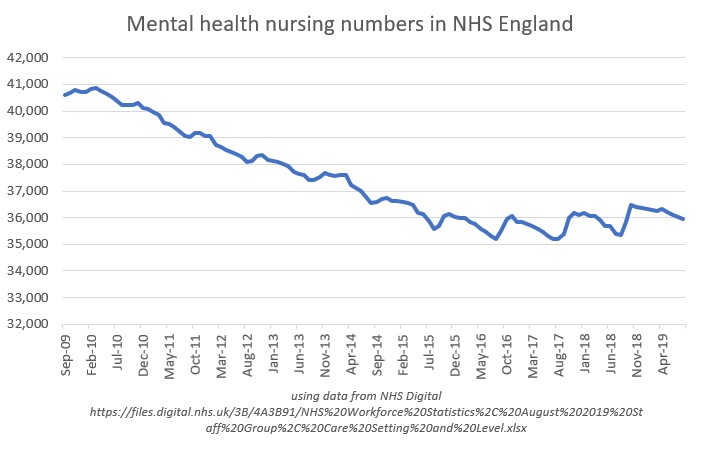
As a mental health nurse academic I am acutely aware of the perilous position occupied by my profession in the NHS, with reports from earlier in 2019 pointing to a loss of 6,000 mental health nurses in NHS England since 2009. Below is a graph, created using NHS Digital data, which starkly reveals the current situation:
MHN numbers 2019As an aside, data of this type are not published here in Wales. They should be. In any event, quite correctly much concern has been expressed about this startling decline in the workforce, with mental health nursing now singled out as a group needing particular help to improve both recruitment and retention.

Reflecting my position as a health professional academic I hold joint membership of the University and College Union (UCU) and the Royal College of Nursing (RCN). The RCN, along with other health service unions like Unite and Unison, is trying to reverse the crisis facing the nursing workforce. It is campaigning on safe staffing, has published a manifesto to assist nurses wanting to interrogate prospective parliamentary candidates ahead of the December 2019 general election, and through its Fund our Future campaign is lobbying government to reverse the removal of tuition fee and living cost support for students of nursing in England.

These campaigns are important. So far, however, in its public pronouncements the RCN has failed to make the necessary connections between working conditions in universities and the present and future education of student nurses. Put simply, an adequate supply of educated, evidence-minded, person-centred nurses demands an adequate supply of secure, well-supported, fairly paid nurse educators and researchers. Nurse academics typically have career trajectories which are significantly different from those in other fields, with implications for their recruitment, retention and development. The modern norm for historians, physicists and sociologists seems to involve years of precarious, post-doctoral, employment characterised by repeated short-term contracts before landing (if ever) much sought-after full-time academic posts. In contrast, with some exceptions nurses are generally recruited into higher education by dint of their practitioner expertise, their posts linked to the servicing of courses of professional study. This was certainly how it was for me: my academic career commenced with an initial series of short-term employment contracts associated with the leading of a post-qualification course for community mental health nurses. In all universities, nurse academics can soon find themselves carrying major teaching and course management responsibilities, often for programmes and modules of study which run more than once across a single year. Demanding education and education-related workloads can squeeze out time for research, scholarship and wider engagement, in workplaces which traditionally value productivity in these areas for the purposes of career progression.

Expanding the number of nurses to fill the gaps which now exist, for which the RCN and others are rightly campaigning, requires thought and careful planning. In the run-up to the general election both are in short supply as nursing numbers become reduced to political soundbites. More student nurses must mean more nurse academics, but in any future rounds of staff recruitment potential entrants will have their eyes wide open. The erosion of university pensions relative to pensions in the NHS does nothing to encourage those contemplating the leap from health care into higher education (or, at least, into that part of the sector in which the Universities Superannuation Scheme predominates). Very reasonably, those considering future careers as nurse academics will also want to weigh up the appeal of doing work which is undoubtedly creative and rewarding with what they will hear about workloads, developmental opportunities and work/life balance.

I also learn, this week, that Leonardo da Vinci saw the making of connections as necessary in order that we might see the world as it truly is. In my working world, education, research and practice are intimately intertwined. It is disappointing that these connections are being missed by organisations which campaign on the state of nursing and the NHS, but which do not (as a minimum) also openly acknowledge the concerns that nursing and other academics have regarding the state of universities. Right now, some words of solidarity and support would not go amiss.

October review

Over on the website of Mental Health Nurse Academics UK (MHNAUK) I’ve written this brief review of MHNAUK’s last meeting, which took place at Unite the Union’s offices in Glasgow on October 11th 2019. This was a good meeting, with two guest speakers: Lawrie Elliott, Editor of the Journal of Psychiatric and Mental Health Nursing and David Thomson, Chair of the Mental Health Nursing Forum Scotland. I learned lots from both, and amongst other things ended up thinking how organised mental health nurses in Scotland look to be.

As it happens, MHNAUK is also about to embark on something new: next week we’re inviting nominations for people to lead our Education, Research, and Policy and Practice Standing Groups. Standing Groups are the engines of MHNAUK, and have been led thus far by Anne Felton, Mary Chambers and Neil Brimblecombe (and previously, John Baker) respectively. Big thanks to them for their work: the more that members become involved, the better.

Back in Cardiff, with esteemed co-investigators I’ve again (as I mentioned last month) been pressing on with the NIHR HS&DR-funded MENLOC evidence synthesis into end of life care for people with severe mental illnesses. This is proving to be a big piece of work, but we’re on track to submit our report in spring next year. As a team we’re also thinking carefully about future lines of enquiry, as there is lots still to do in this field.

A final thing to note in this catch-up: I’ve been thinking about what to say at next month’s Making a difference in Wales conference, which is all about taking the Framework for Mental Health Nursing forward. I think there is lots which is distinct about health policy and services in this part of the world, but also recognise the existence of gaps between policy and strategy aspirations, and workplace realities. One to mull over.

Summer research summary

Si3mdrnce returning from a week of walking August has included making final preparations for #MHNR2019, which is looking very exciting. Elsewhere, a big part of my work this month has been writing an analysis of qualitative interview data generated as part of a phase 2 trial of 3MDR for military veterans with treatment-resistant post-traumatic stress disorder. 3MDR, or Modular motion-assisted memory desensitisation and reconsolidation, is a novel psychological intervention involving walking on a treadmill towards personally selected images of trauma whilst in the company of a skilled therapist. The study is led by Jon Bisson, and here are Neil Kitchiner and John Skipper talking about what it involves:

Working on a trial has been an interesting, and new, experience for me, and I’ve been learning lots. My qualitative write-up is destined for inclusion in a final report for the trial’s funding body, Forces in Mind Trust, but during this work as a team we’ve also been planning papers for publication.

menloc logo 5MENLOC, our ongoing evidence synthesis into end of life care for people with severe mental illnesses (about which I have written on this blog before), is in full swing. We’ve reached the stage where we’re writing up syntheses of the research papers and other outputs we’ve included, organised via a series of themes. More on this to follow in due course.

Finally, it’s been good to work in support of colleagues who have led new papers for publications. Here’s Jane Davies‘ latest paper on the experiences of partners of young people living with cancer, and a paper led by Ray Samuriwo on wound care and mental health.

Nursing numbers

Next week I’ll be in London for this year’s Eileen Skellern and JPMHN Award evening, hearing Mick McKeown give his Making the most of militant and maverick tendencies for mental health nursing Skellern lecture and Patrick Callaghan deliver his Lifetime Achievement Award address. The day following, June 14th, I’ll be at Kingston/St George’s chairing the summer meeting of Mental Health Nurse Academics UK. One of the things we’ll we talking about is NHS England’s Interim People Plan, which looks to be prioritising mental health nursing as an occupational group in need of support. Here’s a short piece I wrote yesterday for the MHNAUK website, complete with a toxic-looking figure showing the decline in applications for nursing degrees:

The NHS needs more mental health nurses. The most recently available data on the size and composition of the workforce in NHS England, for February 2019, records a total of 36,290 mental health nurses. This compares to an NHS England mental health nursing workforce in September 2009 of 40,602.

Published on June 3rd 2019, the Interim NHS People Plan is about supporting the people needed to deliver NHS England’s Long Term Plan. Chapter 3 addresses nursing, this being the profession where the greatest shortages are found and where the most urgent and immediate action must be taken. Mental Health Nurse Academics UK welcomes the identification of mental health nursing as a priority group, and notes the Interim People Plan’s statement that what must now happen is:

[…] a detailed review across all branches of pre-registration nursing, including a strong focus on the steps needed in mental health and learning disability nursing to support growth in these areas.

The Plan echos Mental Health Nurse Academics UK’s view that undergraduate degree courses offer the best way to secure a future supply of nurses. It also reproduces a figure pointing to a sharp decline in applications for nursing and midwifery courses in England since the removal of bursary support (specifically, a 31% decrease between 2016 and 2018):

Annotation 2019-06-06 120912
Extracted from Interim People Plan, p24

The Interim People Plan places an emphasis on what it refers to as ‘the offer’ made by the NHS to its staff. Mental health nursing needs a better offer if it is to improve the recruitment, retention and support of its current and future members. Mental Health Nurse Academics UK will be looking for concerted action in these areas.

My view is that this decline in applications was entirely foreseeable in the context of the removal of bursaries in England. As it happens, students of nursing and other health professions commencing their programmes of study in Welsh universities in Autumn 2019 can expect to be supported through the award of a bursary, in return for working for two years post-qualification in NHS Wales. That’s a good deal, in my book, and is something presented as part of the country’s wider #TrainWorkLive initiative. I’m not entirely sure how far this ‘Welsh offer’ (to borrow the language of the People Plan) is known throughout other parts of the UK: so I’m happy to give it a nudge here.

COCAPP-A main findings paper

COCAPP-ACOCAPP-A, funded by the NIHR Health Services and Delivery Research Programme, investigated care planning and coordination in inpatient mental health services. It was led by Alan Simpson, and I was mighty pleased to have been part of the research team. The full, 270 page, report appeared in 2017. Now, a derived paper reporting main findings has appeared in the journal BMC Psychiatry. Lead authored by Michael Coffey this article amounts to a more modest 18 pages, which means it stands a chance of actually being read by people able to make use of it.

As a gold open access article the paper is free to download to anyone with an internet connection. As a taster, here’s the abstract:

Background: Involving mental health service users in planning and reviewing their care can help personalised care focused on recovery, with the aim of developing goals specific to the individual and designed to maximise achievements and social integration. We aimed to ascertain the views of service users, carers and staff in acute inpatient wards on factors that facilitated or acted as barriers to collaborative, recovery-focused care.
Methods: A cross-national comparative mixed-methods study involving 19 mental health wards in six service provider sites in England and Wales. This included a survey using established standardised measures of service users (n = 301) and staff (n = 290) and embedded case studies involving interviews with staff, service users and carers (n = 76). Quantitative and qualitative data were analysed within and across sites using descriptive and inferential statistics, and framework method.
Results: For service users, when recovery-oriented focus was high, the quality of care was rated highly, as was the quality of therapeutic relationships. For staff, there was a moderate correlation between recovery orientation and quality of therapeutic relationships, with considerable variability. Staff members rated the quality of therapeutic relationships higher than service users did. Staff accounts of routine collaboration contrasted with a more mixed picture in service user accounts. Definitions and understandings of recovery varied, as did views of hospital care in promoting recovery. Managing risk was a central issue for staff, and service users were aware of measures taken to keep them safe, although their involvement in discussions was less apparent.
Conclusions: There is positive practice within acute inpatient wards, with evidence of commitment to safe, respectful, compassionate care. Recovery ideas were evident but there remained ambivalence on their relevance to inpatient care. Service users were aware of efforts taken to keep them safe, but despite measures described by staff, they did not feel routinely involved in care planning or risk management decisions. Research on increasing therapeutic contact time, shared decision making in risk assessment and using recovery focused tools could further promote personalised and recovery-focused care planning.

Introducing the MENLOC study

menloc logo 5A big part of my work this year is this recently funded evidence synthesis in the area of end of life care for people with severe mental illness. This is a cross-university study, supported by the National Institute for Health Research (NIHR) Health Services and Delivery (HS&DR) Research Programme, which also features service user researchers and a stakeholder advisory group populated by people with experience in both the mental health and end of life care fields.

Here, from our protocol, is a summary of what we’re up to:

The aim of this project is to synthesise relevant research and other appropriate evidence relating to the organisation, provision and receipt of end of life care for people with severe mental illness (including schizophrenia, bipolar disorder and other psychoses, major depression and personality disorder) who have an additional diagnosis of advanced, incurable, cancer and/or end-stage lung, heart, renal or liver failure and who are likely to die within the next 12 months.

Outputs from the project will be tailored to stakeholders, and clear implications will be drawn for the future commissioning, organisation, management and provision of clinical care. Recommendations will be made for future data-generating studies designed to inform service and practice improvements, guidance and policy.

In this context, summary objectives are to:

  1. locate, appraise and synthesise relevant research;
  2. locate and synthesise policy, guidance, case reports and other grey and non-research literature;
  3. produce outputs with clear implications for service commissioning, organisation and provision;
  4. make recommendations for future research designed to inform service improvements, guidance and policy.

This review will be conducted according to the guidance developed by the Centre for Reviews and Dissemination (CRD) and will be reported following the Preferred Reporting Items for Systematic Reviews and Meta-Analyses (PRISMA) statement recommendations. Reflecting Evidence for Policy and Practice Information (EPPI) Centre principles, opportunities will also be embedded into the project to maximise stakeholder engagement for the purposes of both shaping its focus and maximising its reach and impact.

Searches will be developed initially using Medical Subject Headings (MeSH) and text words across health, social care and psychology databases from their inception. In consultation with a stakeholder advisory group, supplementary methods will be developed to identify additional material including policies, reports, expert opinion pieces and case studies. All English language items relating to the provision and receipt of end of life care for people with severe mental illness and an additional diagnosis of advanced, incurable, cancer and/or end-stage lung, heart, renal or liver failure will be included. All included citations will be assessed for quality using tools developed by the Critical Appraisal Skills Programme (CASP), or alternatives as necessary if suitable CASP tools are not available. Data will be extracted into tables, and subjected to meta-analyses where possible or thematic synthesis with help from NVivo. Strength of synthesised findings will be reported where possible using GRADE and CerQual.

Information derived from the processes described above will be drawn on in an accessibly written summary. Uniquely, this synthesis will comprehensively bring together evidence on factors facilitating and hindering high-quality end of life care for people with severe mental illness, who have an additional diagnosis of advanced, incurable, cancer and/or end-stage lung, heart, renal or liver failure, and evidence relating to services, processes, interventions, views and experiences. Implications will be stated for the improvement of relevant NHS and third sector care and recommendations will be made for future research.

menlocRight now, having convened a first advisory group meeting, we’re busy searching and sifting for evidence mostly through reviewing citations identified in a series of comprehensive database searches. I’ll be posting more here as the study progresses, but for the detail a good place to go is here for the published protocol.

Coordinating mental health care

Hot on the heels of the publication of this paper from COCAPP, I’ve had two opportunities in recent weeks to present the content to (very select) groups, first at City, University of London and then at the South Wales Mental Health Nursing Journal Club and Seminar Group. Because I can, I thought to share the slides: so here they are, for anyone interested:

Plan4Recovery

Here’s a post introducing the main findings paper from the Plan4Recovery study, led by Michael Coffey and funded through a Health and Social Care Wales Social Care Research Award.

Plan4Recovery used qualitative and quantitative methods to investigate the relationships between recovery, quality of life, social support and shared decision-making amongst people using social care services in Wales. The project team included mental health researchers with practitioner backgrounds, experience of using services, and of mixed methods studies. The paper, published in the journal Social Psychiatry and Psychiatric Epidemiology, is in gold open access form which makes it free to download.

For a shortcut, here’s the abstract:

Purpose

Mental health care is a complex system that includes social care organisations providing support for people with continuing needs. The relationship over time between decisional conflict, social support, quality of life and recovery outcomes across two time periods for people experiencing mental health problems in receipt of social care was investigated.

Methods

This is a mixed methods study comprised of a quantitative survey at two time points using measures of decisional conflict, social support, recovery and quality of life in a random sample (n = 122) using social care services in Wales, UK. In addition, 16 qualitative case studies were developed from data collected from individuals, a supportive other and a care worker (n = 41) to investigate trajectories of care. Survey responses were statistically analysed using SPSS and case study data were thematically analysed.

Results

Participants reported increasing decisional conflict and decreasing social support, recovery and quality of life over the two time points. Linear regression indicated that higher recovery scores predict better quality of life ratings and as ratings for social support decline this is associated with lower quality of life. Correlational analysis indicated that lower decisional conflict is associated with higher quality of life. Thematic analysis indicated that ‘connectedness and recovery’ is a product of ‘navigating the system of care’ and the experience of ‘choice and involvement’ achieved by individuals seeking help.

Conclusions

These results indicate that quality of life for people experiencing mental health difficulties is positively associated with social support and recovery and negatively associated with decisional delay.

Observations from a small country

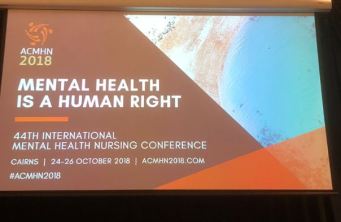
IMGP3076Here are two digital mementos from my trip to Australia: a photograph of a humpback whale (which breached and swam under the boat I was on for a good 45 minutes), and – more pertinently, perhaps, given the usual subject matter of this blog – the slides I used in my keynote talk at #ACMHN2018. This was the conference of the Australian College of Mental Health Nurses, held in Cairns in October 2018, and from which I have now returned home. My talk was all about mental health policy, services and nursing in Wales: which means this may actually be the only time I ever get to write about both ‘Wales’ and ‘whales’ in the same post.
Here are the slides, the material for which I’m also aiming write up as a paper:


#ACMHN2018

Big thanks to the Board of Directors of the Australian College of Mental Health Nurses (ACMHN) for inviting me to speak at the 44th International Mental Health Nursing Conference, or #ACMHN2018, which took place in Cairns between 24th-26th October 2018. Never having been to Australia before, and indeed having never before left Europe, this was a big deal and I was grateful for the opportunity.

The theme for the conference was ‘mental health as a human right’, and the three days opened with a memorable welcome to country given by Yidinji tribal elder Henrietta Marrie followed by music and dance. Keynote speakers reflected well the conference theme in their talks, variously focusing on tackling health inequalities (including amongst Aboriginal people), suicide prevention in LGBQTI communities, rural mental health, human rights progress in Ireland (and more). Concurrent presentations were also very high-quality. Worth noting, too, is how the ACMHN used its conference to raise awareness of its campaign, being run in concert with other health care organisations, to demand that children and families seeking asylum and currently being held on the island of Nauru be brought to Australia.

In my keynote I elected to speak about mental health policy, services and nursing in Wales and made the point that the Welsh approach to health care is different from that found elsewhere in the UK, or in other parts of the world. To illustrate this I spoke about the Mental Health (Wales) Measure, the introduction of both future generations and safe staffing legislation and the imminent appearance of a Framework for Mental Health Nursing prepared through the All Wales Senior Nurse Advisory Group for Mental Health.

I realise that in the UK we have nothing quite like the ACMHN: a professional organisation comprised of subscribing members, which represents its field, acts as a credentialing body (nursing education in Australia being a generalist one) and which lobbies for better services and higher standards. The College has a Board and an elected president, the current incumbent being Eimear Muir-Cochrane, and employs a team including Kim Ryan as salaried chief executive officer. The ACMHN performs no trade union function (like the RCN, Unite the Union, and Unison in the UK), and does not register or regulate nurses (as the NMC does). Australia looks to have a number of colleges and associations organised along the same lines as the ACMHN, and I’ve found this site which lists bodies advancing practice and representing members in the fields of critical care, midwifery, children and young people’s nursing, and more.

#ACMHN2018 was an excellent experience, and I was pleased to meet roomfuls of fine and interesting people. For the record, #ACMHN2019 takes place in Sydney between 8th-10th October 2019, with the theme of ‘integrated care’.