
I teach a session on the politics of research funding, offered now as part of our workshop and seminar series for postgraduate research students in the School of Healthcare Sciences at Cardiff University. One of the things I talk about is the Research Excellence Framework (REF), and how the outcomes from the REF are used to inform the annual distribution of quality-related (QR) funding to universities as part of the ‘dual support’ approach, along with providing evidence of a return on public investment and generating information for the purposes of benchmarking and comparison.
The REF moves in long cycles. The first took place in 2014, replacing the Research Assessment Exercise which had previously run every five or so years from the middle of the 1980s to 2008. For the 2021 Research Excellence Framework (REF2021) universities made submissions to up to 34 units of assessment, each covering a subject area and each operating underneath one of four main panels. Most research conducted by nursing academics in the REF2021 census period will have been submitted to the Allied Health Professions, Dentistry, Nursing and Pharmacy unit of assessment (UOA). In each UOA, expert panels reviewed the quality of three separate components within each submitting university’s return: outputs, impact and environment. An output might be a single journal article, or perhaps a book or monograph, assessed by members of the relevant expert panel for its ‘originality, significance and rigour’. The assessment of impact involved the expert review of university-submitted case studies exemplifying the ‘reach and significance’ of research beyond academia. Environment involved review of how far each university was enabling the ‘vitality and sustainability’ of excellent research in the subject area.
Suffice to say, the REF is a big deal for universities, subject areas and researchers, with very considerable resources being devoted by institutions to secure as favourable a set of outcomes as possible. As a process it has both its supporters and its detractors, with a summary of controversies surrounding the REF appearing on this Wikpedia page. Debates aside, results from REF2021 have now been published, with the data searchable both by university and by unit of assessment. Main panel reports have also appeared, with more data (including the detail of each submission to each UOA) expected in due course. Both the Times Higher and the Wonkhe teams have produced independent analyses of what the results mean, with the Council of Deans of Health publishing a response highlighting how ‘research undertaken by our members [as submitted to the Allied Health Professions, Dentistry, Nursing and Pharmacy UOA] tackles real life health challenges facing patients, health services and local communities as well as addressing wider societal challenges and global health inequalities.’
Extracted directly from the Overview report by Main Panel A and Sub-panels 1 to 6, here is a summary of the average assessed quality profile of research submitted to the Allied Health Professions, Dentistry, Nursing and Pharmacy UOA:
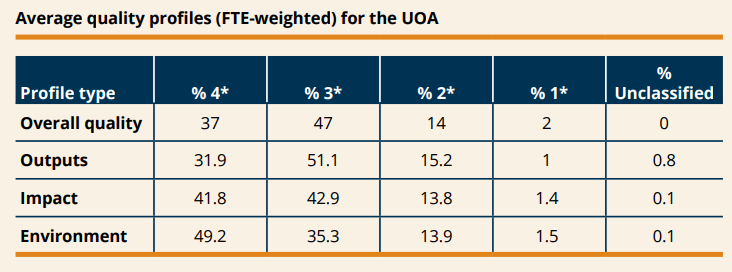
Here, 4* refers to ‘world-leading’, 3* to ‘internationally excellent’, 2* to ‘internationally recognised’ and 1* to ‘nationally recognised’. Overall, then, this table gives lots to celebrate, pointing to allied health, nursing and related research being done to a very high quality, and making a significant difference beyond academia. This much is acknowledged explicitly in the UOA-specific overview report, but so too is a note on the importance of continued investment in research capacity-building and in supporting early careers. I find it hard to disagree with that sentiment. Whilst REF outcomes come round only once every six or seven years, the work of enabling and growing research capability is a constant.
 October has been a month of external events. These began with the inaugural All Wales Mental Health Nursing and the
  Following a discussion involving the event’s steering committee and
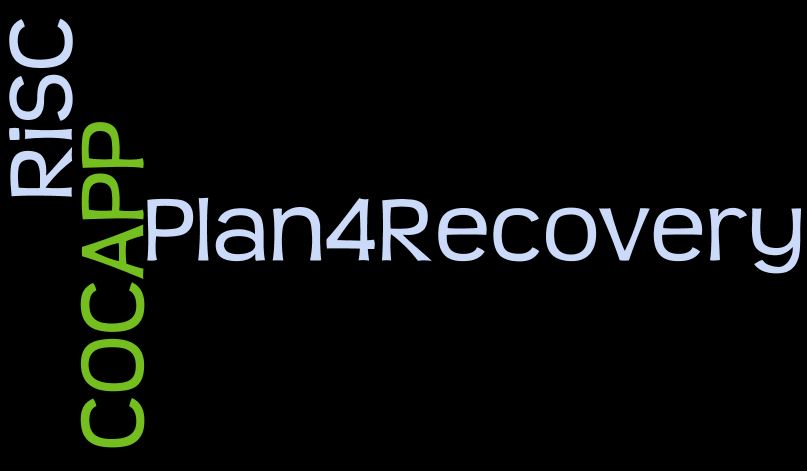 Back in the world of actually doing research, as opposed to the world of assessing research outputs and fretting over returns to assessment exercises, I am pleased to say
  Over on the
  Happy new year. 2013 promises plenty. I’m committed to two externally funded research projects, collaborating with outstanding folk located both in, and out, of Cardiff University. In the fullness of time I’ll perhaps blog about these studies when there’s more to say. I’ll be supervising people working on their doctorates, and as always will be teaching and assessing across the range of academic levels. I’ll be working up grant applications (there’s one in the pot at the moment), writing papers (including the one
  In 2013 there’s also the small matter of the
  Ben Hannigan's blog