With just under one month to go before the deadline for submission of abstracts for the 2019 running of the International Mental Health Nursing Research Conference I thought it an idea to draw attention to this top tips post from two years ago. As I suggested then, conference guidelines are there to be followed. For the past couple of years we’ve published criteria for abstract selection, including information on the structured presentation of quantitative, qualititative and non-empirical abstracts.
And, whilst I’m writing about #MHNR2019, now is a good time to link to this MHNAUK post announcing Sue McAndrew as Mental Health Nurse Academics UK Lecturer for 2019. Sue works at the University of Salford, and will be drawing on her work in children’s and young people’s mental health.
The call for abstracts for the 25th International Mental Health Nursing Research Conference is now live, with this year’s conference organised under the theme of From Global to Local: Mental Health in a Connected World. We’ll be meeting, for the first time, in London: specifically, in the RCN HQ in Cavendish Square. This is also the year that we’re working with the International Society of Psychiatric/Mental Health Nurses, and we’re hoping the event has a truly international feel. The deadline for receipt of nominations for people to deliver the Annual MHNAUK Lecture at #MHNR2019 has passed, and the commitee will be deliberating over the coming weeks before an announcement is made.
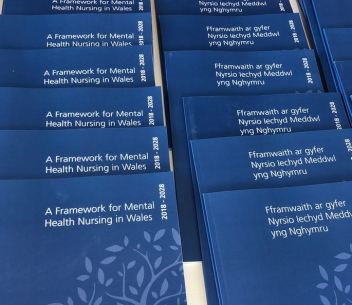
Meanwhile, on Mental Health Nurses’ Day, February 21st, here in Wales a new ten year Framework for Mental Health Nursing was launched at Cardiff University’s Hadyn Ellis Building. The Framework contains 13 pledges organised through four key themes: Professionalism, Voice and Leadership; Workforce and Education; Promoting Population Health and Wellbeing; and Quality and Safety of Care. It is also replete with exemplars of good practice.
One day after the Framework launch I was in the fine surroundings of the University of Birmingham for 2019’s first meeting of Mental Health Nurse Academics UK. A note of the event, which was attended by almost 50 people, can be found here. The meeting was a full one, with updates on both the REF and the TEF, experiences of course validation reflecting new NMC standards and more besides.
Earlier this month I made the journey to the Science and Industry Museum in Manchester for the 24th International Mental Health Nursing Research Conference (#MHNR2018). Here’s a snip from the short piece which appeared on the Mental Health Nurse Academics UK (MHNAUK) website:
This is MHNAUK’s conference, run annually in conjunction with the RCN and with support from André Tomlin (The Mental Elf) who used social media to bring the event beyond the room.
Keynote speakers were: Dr Eleanor Longden, who talked about voice-hearing as a complex and significant experience; Professor Sonia Johnson, who spoke about the need to improve lives through improved psychosocial interventions; Professor Alan Simpson, who delivered the second annual MHNAUK lecture with a call for mental health nurses to speak up and assert their value; Professor Sir Robin Murray who spoke about biopsychosocial approaches to understanding, and treating, psychosis; and Dr Jonathan Gadsby who talked about the Critical Mental Health Nurses’ Network and invited delegates to join a discussion on conscientious objection. Concurrent sessions and symposia were packed and lively, and discussions and debates at the venue were mirrored by conference-related discussions taking place online. Podcasts with Robin Murray, Sonia Johnson, Alan Simpson and Laoise Renwick (who chaired the #MHNR2018 conference committee) can be found here on Soundcloud.
#MHNR2018 closed with a date for the diary: the 25th International Mental Health Nursing Research Conference will take place on 12th-13th September 2019 at the RCN headquarters in London. More details about #MHNR2019 will be posted in due course.
This was an excellent two days, and I reflect on how far the conference showcased variety in perspectives and positions. Now, with John Baker having served a four year term as a member of the conference organising committee, expressions of interest are being sought (through MHNAUK) for an experienced mental health nurse academic to take his place. Planning for #MHNR2019 will begin in earnest towards the end of this year or early next, though as the post reproduced above states we already have our dates and venue confirmed.
Whilst we’re on the subject of conferences: earlier this year I received an invitation from Kim Ryan and the Board of Directors of the Australian College of Mental Health Nurses to speak at the 44th International Mental Health Nursing Conference. This takes place next month, in Cairns, and I’m currently in the process of writing (and rewriting) what I’m going to say. The subtitle to my talk is, ‘observations from a small country’, and I’m going to talk about the distinctiveness of mental health services and nursing in Wales and what can be learned from this. Perhaps when I’m done, and the conference has closed, I’ll post a full set of my slides here to this site.
Earlier this month I made the trip to the University of Greenwich to celebrate this year’s Skellern Lecture and Journal of Psychiatric and Mental Health Nursing (JPMHN) Lifetime Achievement Award. First up was Geoff Brennan, whose lecture was titled The dark art of influencing inpatient mental health nurses. Over his career Geoff has worked as a consultant nurse, and has edited (with Cath Gamble) the textbook Working with serious mental illness. He now serves as Executive Director of Star Wards, and in his talk gave an energetic account of hospital mental health nursing now and in the past, and the skills and qualities which underpin this work. Geoff has long been a champion for inpatient nursing, but in his talk he was generous, too, in acknowledging the contribution made by others in this field. Special mention went to Len Bowers, who led the Safewards trial and who (until his retirement) oversaw the dissemination of findings and the work of promoting the uptake of these around the world.
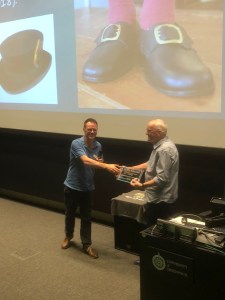
Michael Coffey presents the JPMHN Award to Philip Burnard
This year’s JPMHN Lifetime Achievement Award went to Philip Burnard, Emeritus Professor in the School of Healthcare Sciences at Cardiff University, and I was very pleased to have the opportunity to introduce Phil to those present. Phil’s oeuvre is a remarkable one, comprising books and papers on interpersonal and communication skills, research methods, ethics, culture, stress and burnout, and much more. The Scopus database lists 181 articles which Phil has authored, including one (A method of analysing interview transcripts in qualitative research) which has been cited well over 1,000 times. Phil gave a frank, and drily humorous, account of his early life, his career in nursing practice and academia, and his experiences of depression. I enjoyed hearing Phil speak, too, of his attachments to shoes and hats (as the photo in this post confirms).
Big congratulations indeed to Geoff and Phil, and worth noting that information on nominations for future Skellern Lecturers and JPMHN Achievement Awards can be found here. The day following this year’s event involved a return to the University of Greenwich, hosted by Deborah Watkins, John Crowley and colleagues, for the summer meeting of Mental Health Nurse Academics UK. Our surroundings were, surely, the grandest in which we’ve ever gathered as a group, being within the Maritime Greenwich World Heritage Site. Our meeting was particularly well-attended, with people making the journey from all four countries of the UK. Guest speaker was Dave Munday from Unite the Union, who gave an update on the #MHnursingFuture campaign. Also discussed were the new NMC standards and the assessment of mental health nursing students’ practice, MHNAUK’s recent responses to consultations and position papers, and (via a presentation from Mary Chambers) research impact. We meet again at the University of Essex in the Autumn.
Today I’ve been at this year’s meeting of the International Mental Health Nursing Research Conference scientific committee. This convened at the Royal College of Nursing headquarters in London. We had a good range of abstract submissions to deliberate over, and people can expect emails soon informing them of our decisions. We’re also pleased to have been able to identify our annual Mental Health Nurse Academics UK Lecturer for 2018. I dare not make an announcement on this front in this post, and shall wait for official communications to be made first.
Hopefully #MHNR2018, which takes place in Manchester in the middle of September, will be a lively and well-attended affair. There is, it has to be said, space for the conference committee to receive and deliberate over a larger number of conference abstracts than it did today. For #MHNR2019, my early request is: spread the word, and get writing. And for #MHNR2018, for people who missed the abstract submission date: do consider, if possible, participating as a delegate anyway.
Elsewhere, having been stuck in the PLOSONE editorial and peer review system for a spectacularly long period, this week’s good news on the mental health research front includes the acceptance for publication of a paper reporting the COCAPP metanarrative review of care planning and coordination. This has been lead authored by Aled Jones, and once it becomes available in the public domain I’ll post a link. Also accepted for publication this week is a paper lead authored by Jane Davies, derived from her PhD which I supported as a supervisor with Danny Kelly. Jane’s study was an investigation into choice and control in young people with cancer, and this article accepted by the European Journal of Oncology Nursingreports some of Jane’s main findings.
Talking of publications, later this week I head into a meeting of the Cardiff University Press editorial board. Up to now I haven’t written much on this site about the Press, which has been around since 2014 and supports journal publishing in diamond open access form. The Press is in the process of extending into monograph publishing, too, having struck an agreement with Ubiquity. For people looking to move their existing journal titles, or to found new ones, the Press is a good place to go and information on opportunities of this type can be found here.
Mental health nursing is important and fulfilling work, and offers a fine and rewarding career. More people also need to be doing it. By way of background, last month Mental Health Nurse Academics UK (MHNAUK) submitted a response to Health Education England (HEE)’s Facing the Facts, Shaping the Futuredraft health and care workforce strategy for England to 2027. Contained in this HEE draft are figures on trends in the numbers of nurses, by field of practice, employed in NHS England over the period 2012 to 2017.
Growth/reduction in NHS employed nurses and midwives by field, 2012 to 2017 (extracted from Facing the Facts, Shaping the Future)
Obvious at a glance from this figure is the decline in both mental health and learning disability nursing numbers over time. Elsewhere HEE also describes a 14% mental health nursing vacancy rate.
Now, the Nursing Times reports a reduction for the second year in a row (£) in the numbers of applications for nursing degrees received via the Universities and Colleges Admissions Service (UCAS). Declining applications need to be viewed in the context of the removal of bursaries for students of nursing enrolling at English universities. In MHNAUK we have said, more than once, that we fear the loss of bursary support poses a particular threat to our field of practice. The same applies to learning disability nursing, where at least one degree programme closed last year (£).
With all this in mind this may be a good time to remind people of this useful page, hosted on the MHNAUK website, on joining the profession. As this says:
Forget all the stereotypes about straitjackets and Victorian asylums; modern mental health nursing focuses on helping and supporting people from all walks of life with a variety of ‘common’ mental health disorders (such as anxiety and depression) as well as more serious disorders such as drug and alcohol problems, suicidal feelings, psychosis, bipolar disorder and dementia. They also play a key role in promoting mental health and well-being among the public and preventing mental health problems occurring in the first place.
This helpful MHNAUK resource also includes suggestions for further reading, included in which are texts describing in detail many of the skills that mental health nurses routinely use and the context in which they go about their work. And, for any reader contemplating applying to any of the 60+ mental health nursing degree courses offered throughout the UK, do give some thought to our undergraduate nursing programmes here in the School of Healthcare Sciences at Cardiff University.
Suffice to say that this has been the most peculiar of months. Large parts of the last four or five weeks have been spent on picket lines, at rallies, in community teach-outs and working to contract. I’ve joined with friends, old and new, in support of decent pensions for university staff. The Wikipedia page dedicated to the current dispute reports that the strikes are the most sustained to have ever taken place in UK higher education. A first offer to University and College Union members to end the action having been rejected, with the prospect of a further 14 more days of strikes across campuses looming a new offer has been tabled today (March 23rd). Next week will be critical, I suspect.
Elsewhere, I managed to disappear to the always-spectacular Cornwall for a week. That’s where the photograph above of the boat was taken. In the world of mental health nursing research, preparations for #MHNR2018 are now in full swing, with more information (including on abstract submission) to be found here. Our theme for this year’s conference is Place, Purpose and Politics: Re-imagining Mental Health Care, and we’ll be at the Museum of Science and Industry in Manchester on September 13th and 14th. Our confirmed keynote speakers are excellent in every way: Dr Eleanor Longden, Professor Sir Robin Murray, Dr Jonathan Gadsby and Professor Sonia Johnson. The fifth keynote speaker is…
…potentially you, reader. For the second year running we’re inviting nominations to deliver the Annual Mental Health Nurse Academics UK Lecture. This is a super opportunity for a mental health nurse who has made a significant contribution to the promotion and enhancement of mental health nursing education, research, policy and/or practice to speak at a major international event. Don’t be shy!
In other news, this month I was pleased to see the publication of the National Institute for Health Research (NIHR) Dissemination Centre’s Forward Thinking themed review of research on support for people living with severe mental illness. I was a member of the project steering group for this piece of work, and the finished product is a fine resource indeed. I commend it to all those interested in the evidence base for mental health services and interventions, and am also pleased to report that the review included many studies led by, or otherwise involving, researchers with backgrounds in mental health nursing: Safewards, the City 128 extension, SPICES, RiSC, COCAPP, COCAPP-A, RESPECT.
In previous posts (see here and here) I’ve written about Mohammad Marie’s PhD, which investigated resilience in Palestinian community mental health nurses. A fourth paper derived from this study has just been assigned to the January 2018 issue of the journal Health. This is a review of literature, and addresses (amongst other things) the connections between resilience and the idea of ‘Samud’. By following this link a gold open access version of the paper can be downloaded for free.
Elsewhere, I realise I have neglected to add any recent updates on this site about the work of Mental Health Nurse Academics UK. Last year was an active one. In addition to our usual three meetings we exercised our responsibilities as a Research Excellence Framework nominating body, and responded to a variety of consultations and calls for evidence: a nursing workforce inquiry initiated by the House of Commons Health Select Committee; the Nursing and Midwifery Council‘s proposed standards for education; both NHS Improvement and Centre for Mental Health reports on the mental health workforce; and more besides. Our meetings for this year are all scheduled, and it will be good to catch up in Birmingham in February, Greenwich in June and Essex in October.
Cardiff welcomed delegates to the 23rdInternational Mental Health Nursing Research Conference (#MHNR2017), which took place at City Hall on September 14th and 15th 2017. This was the conference’s first visit to Wales, with the theme for the year being Imagination, Invention and Inquiry. Papers were welcomed emphasising the need for new ideas, new research and new ways of providing services. As a curtain-raiser, with the involvement of André Tomlin (aka The Mental Elf), keynote speakers took part in a pre-conference streamed webinar which can still be viewed here.
#MHNR2017 (which, as readers of this blog will know, was until last year known as the Network for Psychiatric Nursing Research Conference), was again organised jointly by Mental Health Nurse Academics UK (MHNAUK) and the Royal College of Nursing. It remains the UK’s leading annual event of its kind. I was pleased to serve as chair of the conference steering committee for this year, and got to open proceedings with a short welcome address.
Across the two days keynote speakers (all of whom were live streamed: see below) were Professor Joy Duxbury, who drew on her programme of research into reducing restrictive practices; Dr Phil Cooper, Danny Sculthorpe and Jimmy Gittins who gave inspirational talks drawing on the personal experience of mental distress and their work with State of Mind; Dr Jay Watts, who challenged delegates to embrace the idea of trauma-informed care; Dr Michael Coffey, who spoke as one of two inaugural MHNAUK Lecturers about the problem of assessing risk; Professor Paul French, also an inaugural MHNAUK Lecturer, who talked about his programme of research into psychosis; and Professor Gary O’Reilly who introduced his research into the use of computer games as a vehicle for the provision of psychological therapies for young people with mental health difficulties.
Here are the saved live streams from our excellent keynotes for those who are interested. Eventually we’re hoping to upload higher quality recordings to our conference YouTube account:
#MHNR2017 also provided an opportunity for Cardiff academics to showcase their research and engagement activities. Dr Nicola Evans talked of her work with colleagues in Canada and Australia on benchmarking competencies for mental health nurses working in child and adolescent mental health services, and Alicia Stringfellow and Gemma Stacey-Emile talked of their work promoting mental health and wellbeing in Grangetown through the Community Gateway project. John Hyde presented his research into the boundaries between community mental health teams and crisis resolution and home treatment services. On behalf of the team led by Professor Jon Bisson I introduced the ongoing 3MDR for treatment resistant post-traumatic stress disorder study. I also presented a new (and in-progress) analysis from COCAPP of the practice and processes of care coordination, and introduced a paper uniting theory, design and research methods for the study of complex mental health systems.
Elsewhere I heard some outstanding presentations from colleagues elsewhere in the UK and around the world, and was particularly heartened to listen to and to meet student nurses. Thanks for coming, everyone.
Planning for #MHNR2018 will begin shortly, with updates available via the conference twitter account which can be found here.
 With just under one month to go before the deadline for submission of abstracts for the 2019 running of the International Mental Health Nursing Research Conference I thought it an idea to draw attention to this top tips post from two years ago. As I suggested then, conference guidelines are there to be followed. For the past couple of years we’ve published criteria for abstract selection, including information on the structured presentation of quantitative, qualititative and non-empirical abstracts.
 The call for abstracts for the
  Meanwhile, on
  Earlier this month I made the journey to the
 Today I’ve been at this year’s meeting of the
  Mental health nursing is important and fulfilling work, and offers a fine and rewarding career. More people also need to be doing it. By way of background, last month Mental Health Nurse Academics UK (MHNAUK) submitted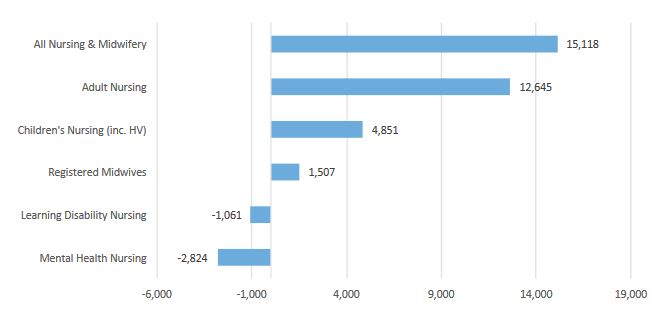
 Suffice to say that this has been the most peculiar of months. Large parts of the last four or five weeks have been spent on picket lines, at rallies, in community teach-outs and working to contract. I’ve joined with friends, old and new, in support of
  In other news, this month I was pleased to see the publication of the National Institute for Health Research (NIHR) Dissemination Centre’s
  Happy new year. In December 2017, I was pleased to see
  In previous posts (see
  October has been a month of external events. These began with the inaugural All Wales Mental Health Nursing and the
  Cardiff welcomed delegates to the 23rd
  Ben Hannigan's blog