Tag: Cardiff University

Cumulative insights

Not for the first time, I’ve attempted to produce some cumulative insights from the past and present mental health research studies I’ve had the opportunity to work on. These include my PhD investigation into work and roles in community mental health care, my post-doctoral study of crisis services, and more recent projects which Alan Simpson, Michael Coffey or I have led on.

The prompt, on this occasion, has been the chance to give a presentation at a School of Healthcare Sciences research seminar taking place this afternoon. For anyone interested, here is the PowerPoint I used. I opened with some general comments on the need for mental health research, and on the funding landscape. I then had some things to say about theory, design and methods. Many of the individual slides have hyperlinks to green open access publications:

Community Gateway 

Yesterday I spent the morning at the Grange Gardens Bowls Pavilion in Cardiff at a Community Gateway event. This was an opportunity to hear about mental health and wellbeing, and to learn how local services are set up. The day was organised by my School of Healthcare Sciences colleagues Alicia Stringfellow and Gemma Stacey-Emile, working with members of the community. I appreciated the update on the activities of the community mental health team (CMHT) based in the Hamadryad Centre, and learnt more about what local Hafal and CAVAMH services are doing. It will be interesting to see how mental health, and health more generally, feature in the Community Gateway in the future.

Community mental health teams are often described as the cornerstone of locally accessible, specialist, mental health services. Working with its two local authority partners, Cardiff and Vale University Health Board currently provides eight CMHTS for adults of working age. The team based at the Hamadryad, I was reminded yesterday, covers the south west of the city taking in the Bay, Butetown, Grangetown, Riverside, Canton and Pontcanna. Speaking in the Bowls Pavilion, CMHT manager Phil Ball did a good job in separating out the work of his team from that of the primary mental health support service (which happens to share use of the Hamadryad building).

Meanwhile…

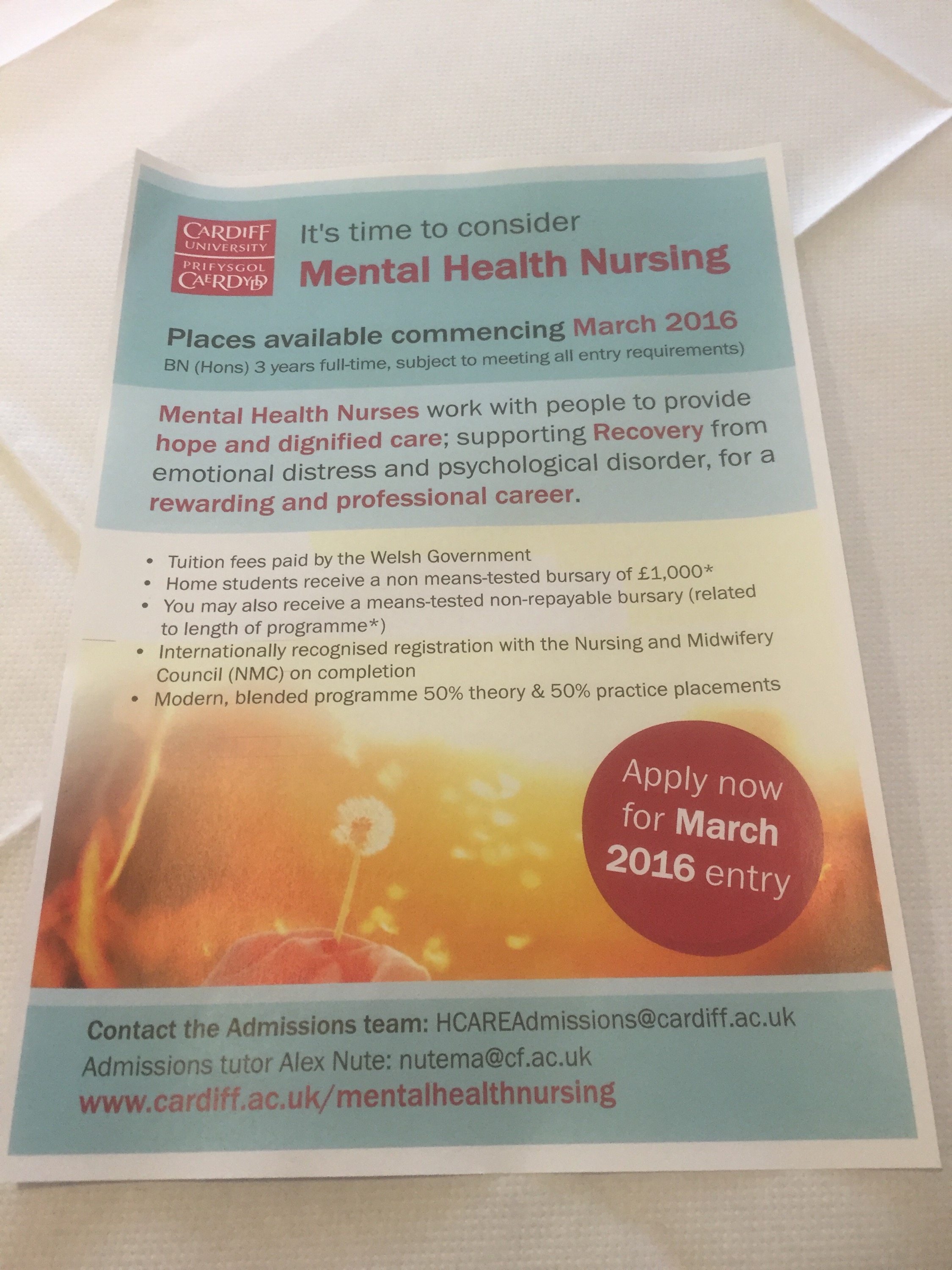
…for anyone wanting to become a mental health nurse, worth noting is that the School of Healthcare Sciences still has some places available for the BN Hons programme commencing in March 2016. The photo here, of a flyer brought to yesterday’s event, gives more information.

Cardiff Public Uni

Last week on this site I wrote a brief piece trailing the seventh Cardiff Public Uni at Chapter. Here, now, is a summary of what happened extracted from the Cardiff Business School news archive:

Five academics presented their research in digestible bite-size chunks at the 7th Public Uni event held at Chapter Arts Centre, Thursday 15 October 2015.

The evening’s topics represented a diverse range of disciplines and themes, bringing together academics from the arts, humanities and sciences.

Dr Ben Hannigan, Reader in Mental Health Nursing at Cardiff University’s School of Healthcare Sciences, kicked off proceedings with a look at how the majority of formal mental health care, in the last century, was provided in hospitals but this changed with the emergence of community care. Dr Hannigan discussed how this came about and the people, policies and practices found within the system now.

Female menstruation remains a largely unspoken topic, simultaneously mundane and taboo. Dr Victoria Leonard, from the School of History, Archaeology and Religion at Cardiff University, explored how entrenched the silence is around monthly bleeding showing how it has been received and represented throughout history.

Dr Dan Read, from the Cardiff University’s School of Physics and Astronomy, highlighted how we have been aware of the existence of magnetic materials since the 4th century BC and asked what have they done for us? His talk illuminated the eventful and fascinating history of magnets.

Cardiff Business School’s Professor Peter Turnbull asked how safe is it to fly, given major cost cutting exercises, and looked at the growing concerns of European regulators that have yet to filter through to the travelling public.

The evening’s final speaker was Dr Emily Garside who explores how plays about AIDS often became first-line of response for activism, awareness raising and fundraising. She explored whether how we use theatre to talk about HIV/AIDS in the UK today.

Speaking about the event, moderator Dr Marco Hauptmeier from Cardiff Business School, said: “The Public Uni series continues to go from strength to strength, generating real buzz, enthusiasm and audience engagement.

“As researchers it is exciting to be able to breakdown your research for an audience, hear their response to it and consider their insights and perspectives. We look forward to continuing to develop the Public Uni series, providing an accessible platform for the diverse and important social, political and cultural research produced across Cardiff.”

The Public Uni series, organised by Dr Marco Hauptmeier from Cardiff Business School and Harriet Lloyd from the School of English, Communication & Philosophy, gives researchers the opportunity to present their ideas and findings to the public in short 10-minute segments. The informal setting and relaxed atmosphere helps to make the research more accessible to audiences outside of the academic arena. Each event highlights the breadth and depth of the exciting research undertaken at Cardiff University.

Follow on Facebook and Twitter to heart about forthcoming events in the Public Uni series or sign-up to the mailing list.

I can confirm that the evening was a thoroughly enlightening and enjoyable one. My thinking now is that the relationship between the ten minute Public Uni format and the standard lecture is comparable to the relationship between Twitter and the traditional academic essay. Succinct, direct, engaging.

Public Uni

After finishing work next Thursday (October 15th 2015) I’ll be heading off to Chapter to take part in the 7th Public Uni. At Public Uni, which is organised by Marco Hauptmeier in the Cardiff Business School, academics get a ten minute opportunity to present their research to an assembled audience. I gather there is some retiring to the bar at some point in the evening, which seems very sensible.

Here’s the flyer for next week’s event: and what an eclectic bunch us five speakers are! In my slot the aim is to compress a history of mental health care, and a summary of where we are now, into 600 seconds of talking. What fun! For a taster of what I’m planning to say, here’s my summary:

Changing landscapeUntil the middle of the last century most formal mental health care was provided in hospitals. This changed with the emergence of community care. Dr Ben Hannigan, Reader in Mental Health Nursing in the School of Healthcare Sciences, explains how this change came about and discusses the people, policies and practices found within the system now.

Studying for a PhD in the School of Healthcare Sciences

PhD2Here in the School of Healthcare Sciences at Cardiff University we’ve continued to think about how best to appeal to potential PhD students, and to simultaneously develop research capacity across nursing, midwifery and the allied health professions. A change which we’ve recently made is to invite applicants for postgraduate research study to make clear how their developing plans fit with the research already going on in at least one of the School’s research themes. To help in this process we’re now advertising areas for future PhD study, closely aligned to the substantive and methodological expertise already found in the School. This makes lots of sense, and will help us to grow research in programmatic fashion and ensure students are appropriately supervised.

The place to go for the current list of topics/areas is here, where under the Workforce, Innovation and Improvement theme you’ll find this:

The use of in-depth qualitative methods to examine mental health systems. Specifically, projects investigating aspects of policy; service organisation and delivery; work, roles and values and user and carer experiences.

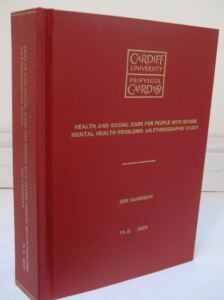
That’s the kind of PhD I’m primarily interested in supervising. For an example of what a completed one looks like, then follow this link to the full text of Dr Mohammad Marie’s freshly minted thesis titled, Resilience of Nurses who work in Community Mental Health Workplaces in West Bank-Palestine.

Mental Health Nurse Academics UK meets in Nottingham

I was unable to make Thursday evening’s Skellern Lecture and Journal of Psychiatric and Mental Health Nursing Lifetime Achievement event hosted by Patrick Callaghan at Nottingham University. My congratulations to Ian Norman and to Marion Janner, this year’s very worthy award winners. As it happens, Ian was one of my PhD examiners. My following of Thursday’s proceedings from afar, via Twitter, tells me I missed a treat.

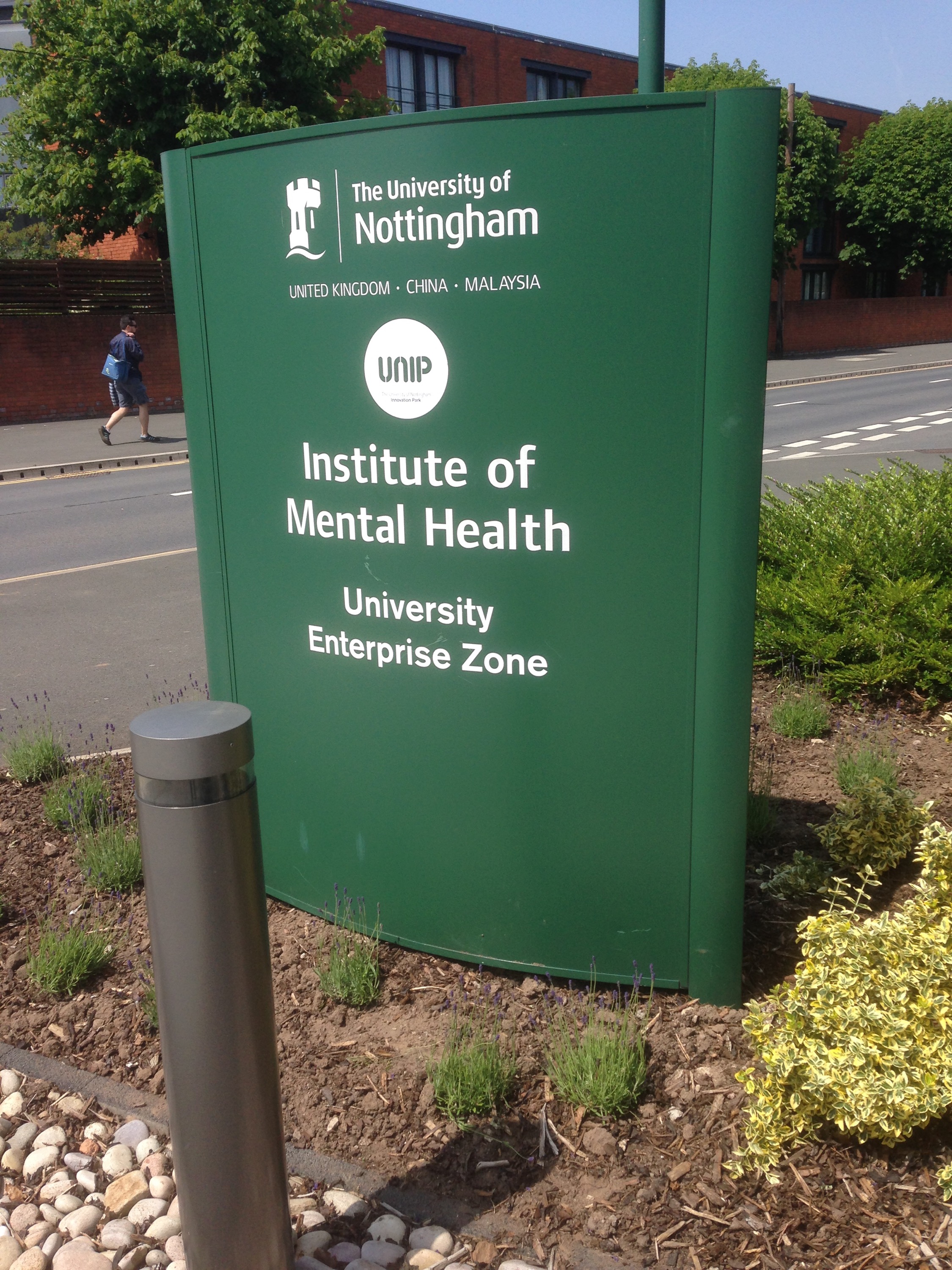
I was, however, able to make the trip to Nottingham for Friday’s summer term meeting of Mental Health Nurse Academics UK (MHNAUK). This was held in the new, and rather impressive, Institute of Mental Health building:

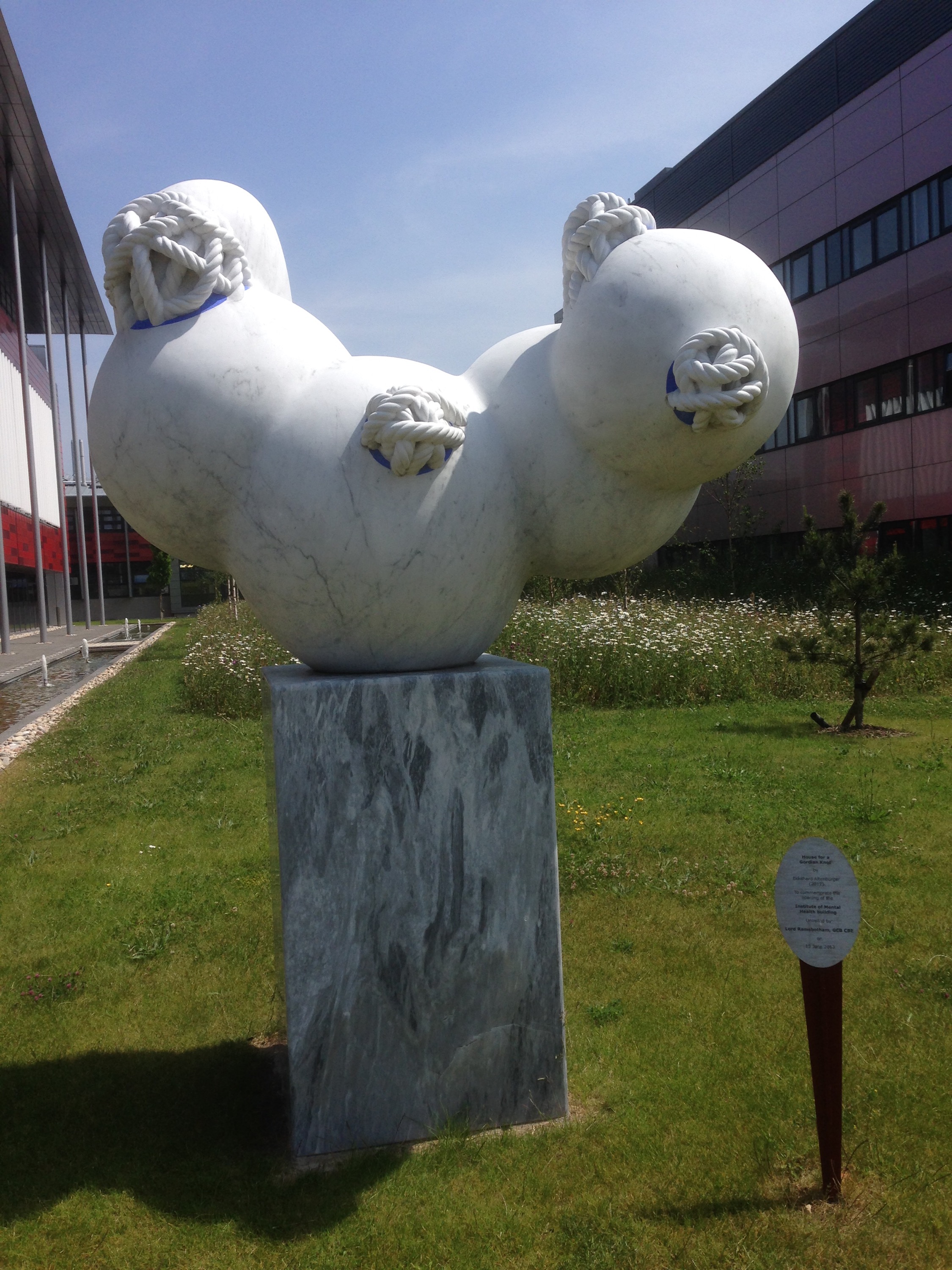
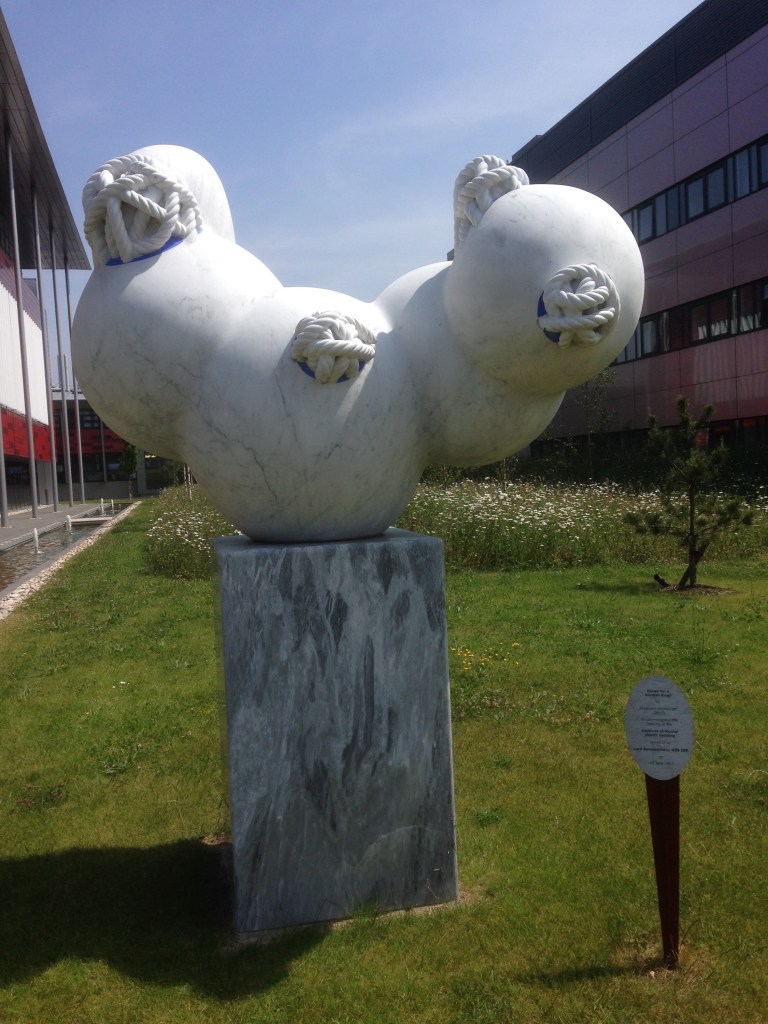
Here’s a picture I took of the sculpture, titled House for a Gordian Knot, displayed at the entrance to the Institute’s main building:
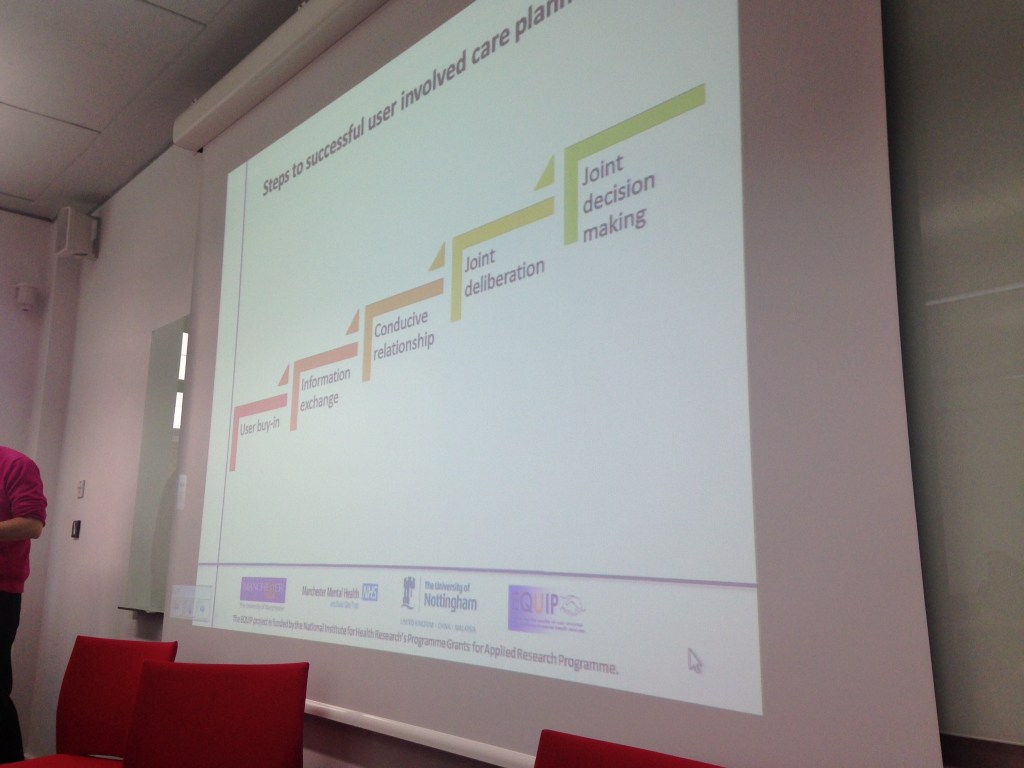
We had three local presentations. First up was  Paul Crawford, who gave a broad overview of the Creative Practice as Mutual Recovery research programme which he leads, followed by Andrew Grundy giving an account of qualitative findings from the Enhancing the Quality of User Involved Care Planning in Mental Health Services (EQUIP) study. EQUIP is an important, NIHR-funded, programme of work which (along with COCAPP and COCAPP-A) is producing evidence of how care planning is being done and how it might be improved. Here’s a photo, taken and shared by Karen Wright, of one of Andrew’s final slides outlining steps to successful user involvement in this process:
Tim Carter talked us through his freshly-minted mixed methods PhD, in which he investigated the use of a preferred-intensity exercise programme for young people with depression. I thought this to be a very well-designed study, which generated considerable discussion around the active ingredients of the intervention and plans for a future follow-up.

Elsewhere Lawrie Elliott, editor of the Journal of Psychiatric and Mental Health Nursing, was welcomed by the group to give an update on developments at the journal in his first year at the helm. I really liked what I heard, and said as much in our discussion. Quality of papers, and relevance to mental health nursing, are being prioritised. Word limits have been increased to allow for more in-depth analysis in accepted articles. To extend its reach the journal now has a Twitter account, which can be followed by clicking the following link:

Ben Thomas from the Department of Health opened a discussion on the future of the Student Mental Health Nursing Conference, the inaugural event having taken place at the O2 Arena in London in February this year. As I understand it, much of the organising was done by staff and students at Greenwich University: well done, them. A group of MHNAUK members representing different universities has agreed to collaborate to keep this initiative going, and with a view to turning it into a cross-UK, rather than an England-only, opportunity.

Following David Sallah’s meeting with MHNAUK in York in March 2015, Joy Duxbury and Steven Pryjmachuk chaired a discussion on the current status of the Shape of Caring review. Since returning from Nottingham I have found that Health Education England is planning to sound out opinion through a series of events running into the autumn. Details are to follow.

Thanks particularly to John Baker, in the weeks leading up to this latest meeting MHNAUK published a response strongly criticising the announcement that the National Institute for Health and Care Excellence (NICE) was ending its work in the area of safe staffing. This decision, defended two days ago by Jane Cummings (Chief Nursing Officer at NHS England), has also been challenged by others including Sir Robert Francis and now the Council of Deans of Health. The Safe Staffing Alliance campaigns in this area, and MHNAUK will continue to make a contribution via a further response the outline of which was agreed in Nottingham. As a reminder of some of the key evidence supporting the importance of registered, graduate, nurses for quality and safety follow this link to an earlier post on this site and this link to a recording of Linda Aiken delivering the Winifred Raphael Memorial Lecture at the University of South Wales on October 1st 2014. And, for those interested in how #safestaffing is shaping up differently across the countries of the UK, follow this link for a record of the progress of the Safe Nurse Staffing Levels (Wales) Bill through the National Assembly for Wales. Following this link brings you to a report reviewing the evidence, commissioned by the Welsh Government and produced by a team led by Aled Jones in the Cardiff School of Healthcare Sciences.

Fiona Nolan shared progress on her survey of mental health nursing research interests and expertise in UK higher education institutions. And, finally, on behalf of the organising and scientific committee Russell Ashmore, Laoise Renwick and I took the chance to update MHNAUK members on progress for the 21st International Network for Psychiatric Nursing Research conference.

#NPNR2015 takes place at the Manchester Conference Centre on Thursday 17th and Friday 18th September 2015. We think the programme is shaping up perfectly, with keynote speakers including England’s National Clinical Director for Mental Health Dr Geraldine Strathdee, Prof Shôn Lewis from the University of Manchester, Mark Brown who ran One in Four magazine and is now involved with The New Mental Health, and André Tomlin who runs The Mental Elf service. We have symposia, workshops and concurrent sessions with papers accepted from presenters around the world, a walking poster tour and the opportunity for fringe events. Make your booking now!
Research in the School of Healthcare Sciences

In February 2015, in the School of Healthcare Sciences at Cardiff University we launched our new research strategy. The School’s main research webpage can be found here, and for the nuts-and-bolts of our four research themes the links to follow are these:

Meanwhile, in the very near future the School (including its researchers) will be occupying additional floors at our base in Eastgate House. This, for those who know Cardiff, is a building situated at the junction of Newport and City Roads. My office, I think, will move: giving me fine views over the city and beyond.

Here are some photos of the 12th floor, as previously shared via a Tweet:

It is very welcome that we will soon have these new facilities available to us, with the rooms in the photos being used mainly by PhD and Professional Doctorate students.

Which brings me neatly to…

Other interesting developments in the School on the postgraduate research student front are plans to recruit very pro-actively. Research theme members have been busy generating topics for doctoral study, which reflect existing areas of substantive and methodological expertise and where capacity to supervise is known to exist. We’ll be advertising these soon, and inviting potential students to tell us how their plans align. The aim, obviously, is that we grow research in programmatic style by building on established and emerging lines of enquiry. For anyone interested, I’m looking to supervise people who want to use in-depth qualitative methods to examine mental health systems (no surprises there, then!). Specifically, this means projects investigating aspects of: policy; service organisation and delivery; work, roles and values; and user and carer experiences.

Other postdoctoral news includes Mohammad Marie‘s (that’s Dr Mohammad Marie’s) successful defence of his thesis at viva last month. Well done! Mohammad has been supervised by Aled Jones and me, and the title of his thesis is Resilience of nurses who work in community mental health workplaces in West Bank, Palestine. Next up for him are papers for publication: and jolly interesting they’ll be, too.

REF results out, COCAPP in

The publication of results from the Research Excellence Framework 2014 (#REF2014) has made this a big week for universities. REF is important for lots of reasons. First, it is assumed that recurring, quality-related (QR), research funding from the UK’s four higher education funding councils will be weighted to the REF results (I say ‘assumed’ here in the light of reports, today, on possible changes to the dual support system: see below for more). Second, universities and the departments within them are ranked based on REF outcomes, making the exercise a crucial one for relative reputations. Third, for governments the REF (like the various research assessment exercises (RAEs) before it) is a way of showcasing the value of research investment and the wider benefits this brings.

Universities will have followed different strategies in managing their REF submissions. In Cardiff a selective return produced a result comfortably better than had been aimed for with the University now ranked in the top five based on research quality. Check out this short video for an overview:

As I hinted above there are, already, questions being asked of how the REF results will (or will not?) be converted into future funding. A report in today’s Observer suggests that changes may be afoot to the dual support (QR and programme/project-related) system. Here’s an early morning tweet from Phil Baty at the Times Higher Education:

So that’s an evolving story which deserves to be closely watched.

Meanwhile…

…moving from research in the round to research projects specifically, this has also been the week that our draft final report from COCAPP has been submitted for peer review to the NIHR Health Services and Delivery Research Programme:

COCAPP has been an investigation into care planning and care coordination in mental health services, and has already been partnered by COCAPP-A. This related study is asking questions in the hospital setting similar to those asked by COCAPP in the community. The coming year sees COCAPP-A getting into full swing, with qualitative and quantitative data being generated across multiple NHS sites in England and Wales.

New academic year post

University departments for the health professions, like Cardiff University’s School of Healthcare Sciences, have long academic years. We welcome intakes of new pre-registration undergraduate nurses every September, which is a time when students of many other disciplines are still enjoying the tail end of their summer holidays. In September we also welcome back existing students, and this afternoon – assuming I can navigate across Cardiff and its NATO summit-encircling ring of steel – I’m off to the School’s University Hospital of Wales (UHW) campus to meet a group of third year undergraduates to talk about the ethical aspects of nursing and healthcare research.

More generally, I start the 2014-15 academic year as incoming Co-Director of Postgraduate Research in the School, sharing this work with my esteemed colleague Dr Tina Gambling. Currently in the School of Healthcare Sciences we have almost 80 students studying for either the degree of PhD or the Professional Doctorate in Advanced Healthcare Practice (DAHP). The student group is a rich and varied one, and includes many who have made significant commitments to leave their homes (and often, their families) in other parts of the world to live and study in Cardiff. An example is Mohammad Marie, who I have written about on this site before.

In the case of new, or intending, postgraduate research students in the School some helpful advice is: keep an eye on the School’s website. We’re in the process of launching a new research strategy with distinct themes, and our aim is to recruit new PhD and Professional Doctorate students whose interests are clearly aligned with these. Research theme groups will, we’re all hoping, become communities of scholars drawing in researchers with all levels of experience: including those just starting out, and those who are internationally regarded.

Multiple Mini Interviews

Over the weekend I was sorry to learn that Inspector Michael Brown’s much-respected, and award winning, MentalHealthCop blog and twitter account have been suspended. I hope he is able to get back to both in the very near future.

Meanwhile, back at base I spent pretty much all of today helping select future students of nursing using multiple mini interviews (MMIs). Not sure about MMIs? Neither was I until recently. Here’s what we’re saying about them in the School of Healthcare Sciences at Cardiff University:

The interviews at Cardiff University School of Health Care Sciences for Nursing involve the use of a Multi Mini Interview procedure which is based on the Objective Structured Clinical Examination format that is commonly used by Health Sciences programmes to evaluate clinical competence.

The interview process is an opportunity to assess interviewees in person and assess information, such as personal qualities, that is not readily forthcoming in traditional application processes. The majority of these interviews will take place the week commencing 17 February 2014. 

The MMIs are made up of a series of short, carefully timed interview stations which provide information about applicants’ ability to think on their feet, critically appraise information, communicate ideas and demonstrate that they have thought about some of the issues that are important to the nursing profession. There are six stations in total. Each mini interview lasts a maximum of 5 minutes.

The School assesses the ability to apply general knowledge to issues relevant to the culture and society in which students will be practising, should they be successful in gaining admission to (and ultimately graduating from) the School. Equally important will be an assessment of the ability to communicate and defend personal opinions.

That’s pretty much it in a nutshell. Sticking to time is clearly important, and there’s plenty of moving around for applicants as they shuttle from station to station. As a process I rather liked it. I’ll be back for another slice of the same tomorrow, but will spare a thought for my esteemed Mental Health Nurse Academics UK colleagues who will be meeting at Lincoln University.