Category: Policy

Conferences and meetings catch-up

October has been a month of external events. These began with the inaugural All Wales Mental Health Nursing and the #FutureMHN conferences, in Cardiff and Birmingham respectively. The former was organised through the All Wales Senior Nurse Advisory Group for Mental Health with support from Public Health Wales. The latter was the third such event of its kind, ably organised by a student-committee led. I’ve since been to Derry for the Autumn term meeting of Mental Health Nurse Academics UK and for Ulster University’s 14th annual mental health conference, the latter organised under the theme of Quality and Compassion: Challenges and Opportunities for Mental Health

At the MHNAUK meeting Professor Hugh McKenna, who chaired the #REF2014 Allied Health Professions, Dentistry, Nursing and Pharmacy Panel, gave a talk on #REF2021. We livestreamed this, and have embedded a link in the MHNAUK website. Scrolling to the bottom of this page takes you there.

Nurses needed

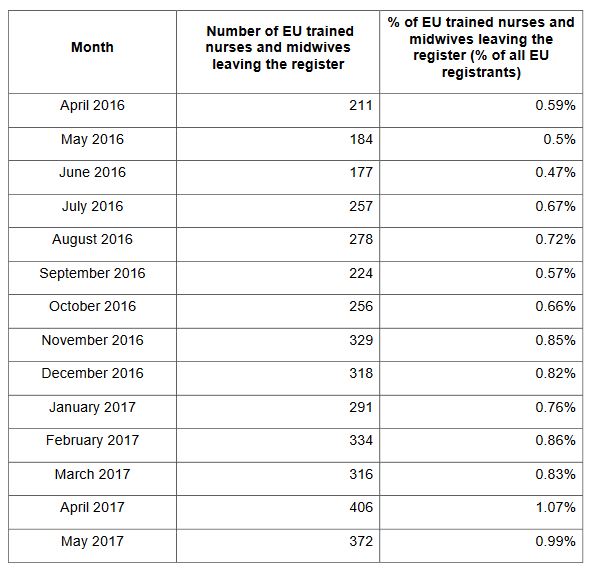
Yesterday the Nursing and Midwifery Council issued a press release reporting on a continued decline in the number of EU-qualified nurses and midwives joining the register, and a simultaneous increase in the number of EU-qualified nurses and midwives leaving. Behind the press release is a longer report, from which I have extracted two tables:

EU trained nurses and midwives joining the NMC register for the first time. Extracted from: https://www.nmc.org.uk/globalassets/sitedocuments/special-reports/nmc-eu-report-june-2017.pdf
EU trained nurses and midwives leaving the NMC register. Extracted from: https://www.nmc.org.uk/globalassets/sitedocuments/special-reports/nmc-eu-report-june-2017.pdf
 Judged on these figures the number of EU nurses coming to the UK looks to have slowed to a trickle. Elsewhere, in its report In short supply: pay policy and nurse numbers The Health Foundation points out that in 2015 NHS England had 22,000 too few nurses specialising in the care of adult patients. The mental health field, The Health Foundation adds, is one where (for the present) tools to calculate safe staffing are virtually non-existent.

Meanwhile, UCAS (the Universities and Colleges Admissions Service) reports that applications for higher education programmes commencing in the 2017-18 academic year have declined across the board, but that it is nursing courses which have seen the sharpest fall. Applicants from England making at least one choice to study nursing dropped by 23% (to 33,810) in 2017.

The RCN, amongst others, has long been campaigning against persistent low pay for NHS nurses, arguing that a career which is so obviously poorly remunerated is no incentive to potential new recruits. Nor, for that matter, does it help efforts to retain existing staff. Previous reports from the RCN tell us that the UK’s nursing workforce is an ageing one

Taken together, the loss of European nurses in the context of last year’s EU referendum, chronically poor workforce planning, a nursing profession which is getting older (and will therefore lose members to retirement), the loss of bursaries in England and continued low pay make for a toxic combination. But things can be done. Agreeing the future security of EU citizens in the UK would be a start, along with removing the NHS pay cap. Reintroducing bursaries might help rekindle UCAS applications. Better planning of future NHS staffing needs is long overdue. Nursing, of course, remains a mightily fulfilling career and I would hate to think that this (admittedly rather negative) post puts off anyone contemplating a move in this direction. But it also serves to highlight some of the serious challenges which lie ahead.


Skellern Award and MHNAUK meet-up

My general election postal vote cast, June 8th began with a PhD examination at City University London moving as the day progressed to London South Bank University for this year’s Eileen Skellern Lecture and Journal of Psychiatric and Mental Health Nursing Lifetime Achievement Award.

As Skellern Lecturer Mary Chambers gave a fine, interactive, presentation emphasising the importance of making visible the invisible work of mental health nurses. Here’s Mary with Ben Thomas and Isaac Marks, no less. Amongst other things Mary talked about her work developing the Therapeutic Engagement Questionnaire, a tool designed to establish the value of mental health nursing.

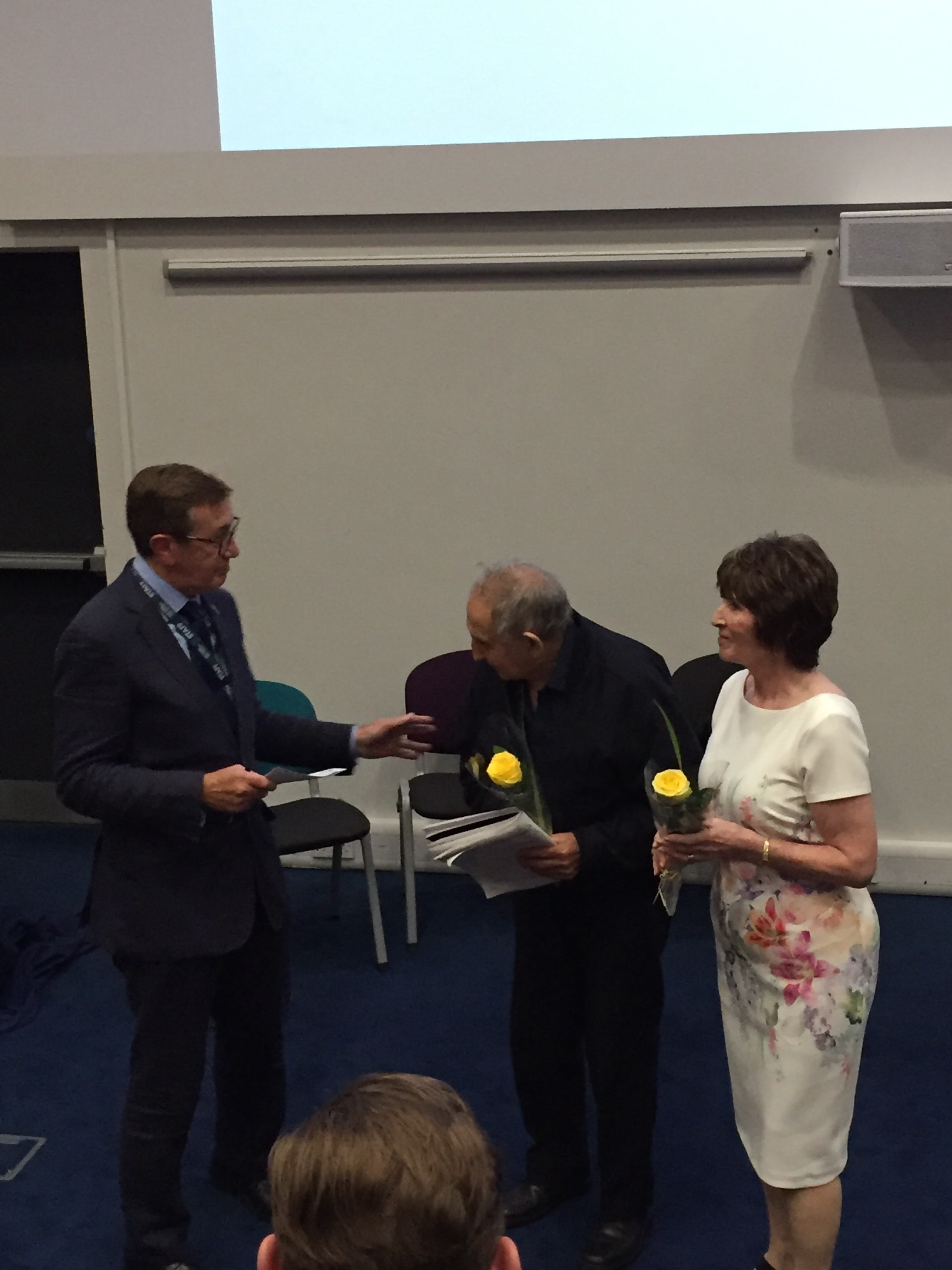
Len Bowers was recipient of the Lifetime Achievement Award. He gave a deeply personal, altogether humorous, account of his career in mental health nursing, highlighting in particular the curious accidents which helped propel him to the forefront of the profession. Len’s Safewards programme, of course, was no accident and his contribution to improving mental health nursing practice through research of this type continues to be sorely missed in the months following his retirement. Here he is receiving his award from Alan Simpson.

Friday was a meeting of Mental Health Nurse Academics UK, hosted by Sally Hardy at London South Bank University. Detailed notes from the meeting will appear in due course on the group’s website. In the morning Katie Evans from the Money and Mental Health Policy Institute talked about the associations between mental health problems and money difficulties, making the point that debt advice (which is a regulated activity) needs to be incorporated into care pathways where necessary.

MHNAUK is in the process of setting up permanent standing groups, covering the areas of: research; education; policy and practice; and communication. Each group now has a lead person, and each group has plenty to do. The education group, led by Anne Felton, will be coordinating MHNAUK’s response to the NMC’s consultation on proposed new standards for pre-registration nurses. At this last week’s meeting, under the education group agenda item, members heard about plans for this autumn’s #FutureMHN conference. The research group, led by Mary Chambers, will be coordinating MHNAUK’s work in the context of the future Research Excellence Framework. On Friday, as part of the research group update I gave a progress review for this year’s #MHNR2017 conference. The policy and practice group is led by John Baker, and members (John included) have been working on (amongst other things) safe staffing. The final group is communications, led by Steven Pryjmachuk and me.

Mental health awareness week

Mental Health Awareness Week 2017 has the theme of ‘surviving or thriving’, this also being the title of a new report from the Mental Health Foundation. Included in this document is a summary of research completed by NatCen, on behalf of the Mental Health Foundation, into the prevalence of mental health problems across the population and into the activities that people do to manage these.

Here’s a snip from the report, summarising the self-reported difficulties experienced by the 2,290 people who took part:

MHF thriving
Extracted from Surviving or thriving

Using their NatCen data the Mental Health Foundation goes on to highlight major health inequalities. Almost three quarters of those on the lowest household income report experience of mental health difficulties, compared to six in ten of the wealthiest. A large majority of unemployed people responding reported experience of mental health problems, with women and younger people also particularly affected.

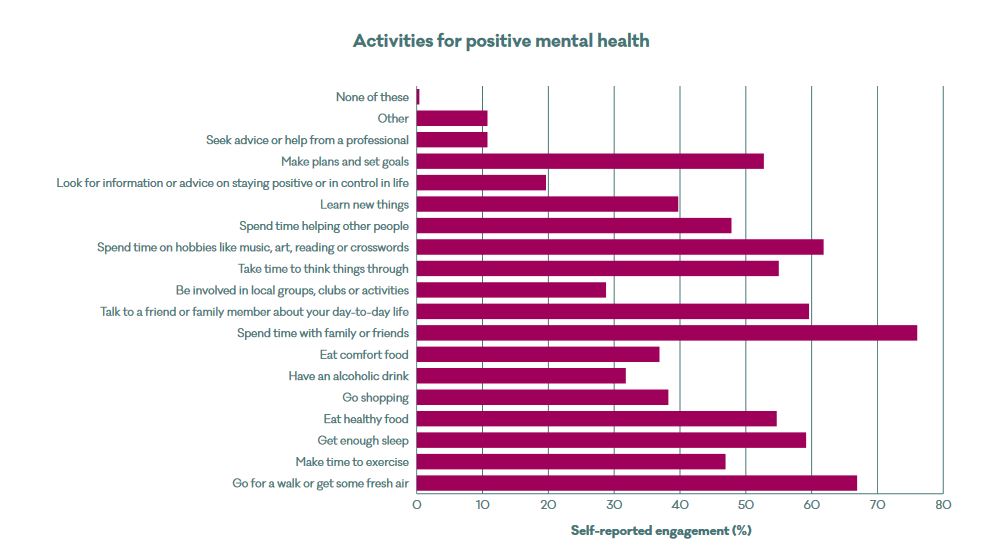
These findings are broadly in line with those reported in the most recent Mental Health and Wellbeing in England Adult Psychiatric Morbidity Survey, the data for which was collected in 2014. This is the latest in a series of studies dating back to 1993, involving (in the 2014 iteration) a sample of some 7,500 people. In the case of Surviving or thriving, the new (to me, at any rate) detail is the reporting of what actions people take to help themselves with their difficulties. Here’s another snip:

Surviving 2
Extracted from Surviving or thriving

Family and friends, outdoor physical activity and hobbies look to be the three most-used strategies. I can’t say I’m surprised by this, and am reminded of the value placed in relationships with others by people taking part in COCAPP.

Elsewhere during Mental Health Awareness Week, The Guardian has published a number of pieces including this one on the shortage of mental health nurses and this one on Hafal‘s Gellinudd Recovery Centre (about which I previously blogged here). Coincidentally, this is also the month that the full and final report from COCAPP-A has been accepted for publication: well done Alan Simpson for leading this work. This mighty tome, reporting from our cross-national study into care planning and coordination in acute mental health inpatient settings, has now proceeded to the production arm of the NIHR and is scheduled to appear in gold open access form towards the end of the year. In the meantime, work is progressing to produce papers for journals. More on these to follow in due course.

Safe staffing (again)

safe staffingJust over a year ago I posted a short piece on this site on safe staffing, particularly noting the work of Shaun Lintern and John Baker in alerting people to the importance of this in the mental health nursing context. Since then, the Nurse Staffing Levels (Wales) Act 2016 has passed into law, and the Welsh Government has opened this consultation on its draft statutory guidance for Local Health Boards and NHS Trusts. My colleague Aled Jones is coordinating a School of Healthcare Sciences response.

Here in Wales, the duty to calculate nurse staffing levels is currently limited to adult acute medical and surgical inpatient wards. In each NHS organisation with responsibilities in these fields, the Government’s draft document refers to the appointment of a ‘designated person’ with the job of calculating nurse staffing levels using three elements:

  • professional judgement;
  • use of an evidence-based workforce planning tool; and
  • a consideration of the extent to which patients’ wellbeing is sensitive to nursing care.

Making these calculations, I can only imagine, will be a mighty challenging task requiring in-depth understanding of individual wards, the characteristics of patients admitted, and use of a tool which has (so far as I understand it) yet to be finalised.

Meanwhile, via John Baker I learn today of this new publication by NHS Improvement on safe, sustainable and productive staffing in mental health services. This is not about safe nursing staffing, but is about interprofessional staffing in specialist mental health services. Here I read of expectations around right staff, right skills and right place, right time and also spot a rapid review of the relevant literature. This begins with the understated observation that, ‘the issue of safe and sustainable staffing in mental health is complex and research is lacking’. I should say so. The time is ripe, I think, for some serious independent studies in this area.


Abstract top tips

img_6122As I mentioned in this earlier post, last month I made the trip to the RCN’s headquarters in London for a first planning meeting for this coming September’s 23rd International Mental Health Nursing Research Conference. Handily for me, we’re meeting in Cardiff: and the call for abstracts will be published soon (very soon). This will include information on the themes for #MHNR2017, and guidance on the preparation and submission of abstracts. Further down the line, sometime in May, the scientific committee will convene to deliberate over which abstracts to accept.

Here, then, are some top tips for people sharpening their pencils in anticipation of the call appearing. When the conference scientific committee meets to pool our individual abstract assessments and to make decisions we’ll be looking, generally put, for well-presented submissions which follow our published guidelines. This may sound obvious, but experience suggests that not everyone submitting abstracts pays close attention to the information provided. We’ll be looking for evidence of relevance to mental health nursing, and commitments to rigour. We will also pay considerable attention to the categorisation of abstracts. Workshops need to involve work; proposals for these should therefore promise interaction and participant activity. Suggestions for symposia should offer to bring a number of people together to present papers on a shared theme, and be presented as a package. Proposals for concurrent sessions should present work completed or well underway; offers to present findings from studies in which data have yet to be generated are unlikely to be accepted. In these cases, submitting poster abstracts might be a better option. And, whilst our conference themes are important, they are not intended to serve as straightjackets: so abstracts relevant to the field but which do not fit perfectly are still worth submitting.

I’ll post more on the conference and its call for papers as things unfold. In the meantime, dig that keyboard out and prepare to get writing.

In with the new

Following a discussion involving the event’s steering committee and Mental Health Nurse Academics UK (MHNAUK), what was the International Network for Psychiatric Nursing Research Conference has now become the International Mental Health Nursing Research Conference. Next year we meet in Cardiff on September 14th and 15th, and early information can be found here. This site will be updated as further plans are made, so it’s worth checking in from time to time. We’ve also updated our conference twitter feed; clicking takes you there. Our hashtag, which is already in use, is #MHNR2017.

For a taster of the conference, here are links to four of last year’s keynote presentations: Steven Pryjmachuk, Elaine Hanzak, Luciana Berger MP and Bryn Lloyd-Evans:

Meanwhile, I’m pleased to have been elected as Vice Chair of MHNAUK. I’ll be working with the Chair, Steven Pryjmachuk, throughout 2017 and 2018 before becoming Chair at the start of 2019 for a further two years. I’m grateful for the opportunity colleagues have given me, and will do my best to lead and represent the group and the wider field. I anticipate having plenty to do, noting changes ahead in the education of nurses, the funding of students and the run-in to the next research excellence framework. More on all these to follow, I’m sure: with time today to draw attention to the decision by the Welsh Government to continue bursary payments in 2017-18 for eligible students of nursing, midwifery and the allied health professionals. As the press release announcing this makes clear, individuals taking this offer up will need to commit ‘in advance to taking up the opportunity to work in Wales, post qualification, for a period of two years’. Entirely unclear are funding arrangements for the period from 2018-19 onwards.

COCAPP Knowledge Transfer

Last week I joined the rest of the COCAPP team at an all-day event at City University London, designed to help NHS staff, service users and carers make use of what we found. I was pleased to meet Donna Kemp, who has since written about her experiences of the day. I thought it would be a nice idea to reblog this.

donnakemp's avatardonnajkemp

Last week I was fortunate enough to be invited to the COCAPP Knowledge Transfer event held at City University London on 21st July 2016. You can read more about this here.

It was great to meet people face to face, beyond Twitter – particularly Alan Simpson (PI) Ben Hannigan, and Michael Coffey who are leading this important NIHR funded research, #COCAPPimpact.

Whats really good about this piece of research is that it is within my area of interest and that the method used aimed to address care planning on 3 levels – macro (national), meso (organisation) and micro (care delivery, face to face). To achieve this they used a mixed methods approach . The fabulousness of this is that it answered the research question on the 3 levels, perhaps anticipating that tackling one level in isolation would give rise to questions in the other levels. Adding to the credibility is…

View original post 359 more words

Research impact

Yesterday’s Health and Care Research Wales conference, held at the SWALEC stadium in Cardiff (more about that later), was all about closing the gaps between research, policy and practice.

There were some excellent keynote speakers. Jenny Kitzinger spoke of her research involving families of people who are minimally conscious, sharing her experiences of working with policymakers to influence at a national level. Jenny argued that impact is helped when research (1) has strong foundations, (2) is collaborative, and (3) is communicated through diverse outputs. ‘Diverse outputs’ means doing a whole lot more than simply writing journal articles (particularly those which end up behind publisher paywalls). For a direct example of how Jenny’s work influences, follow this link for a Parliamentary Office of Science and Technology POSTnote which cites a number of her and her collaborators’ publications.

André Tomlin, aka The Mental Elf, drew on his work with the National Elf Service to make the case for getting evidence into practice. This means communicating research findings in ways which are both understandable and accessible to practitioners. This, of course, is exactly what the Mental Elf Service does, using blog posts and other social media to share key research messages.

Steve Jones is a biologist known to many for his efforts to improve the public understanding of science. In his afternoon address he gave a fascinating account of working with government and the BBC. I liked his upbeat take on the past and present strength of UK science, but also noted his examples of scientific advice being flatly ignored or misused.

The day’s final keynote speaker was Malcolm Mason, whose talk emphasised the time it can take to generate research findings which have the potential to change care and treatment. Malcolm is an oncologist, specialising in prostate cancer, and his message for researchers wanting to make a difference is that they must ask questions which are important and not only interesting.

Worth mentioning, too, are yesterday’s workshops. Three were on offer, from which delegates had the chance to participate in two. As I have some experience in public involvement in research I elected to join the ‘impact on practice’ and ‘impact on policy’ options.

I enjoyed the day, and along the way also appreciated the chance to catch up with colleagues. Overwhelmingly, though, I am left thinking that the work of getting research into policy, services and everyday practice is something which needs to be planned for, and resourced. I also think most researchers (myself included) have some learning to do on this front, and perhaps need to develop some new skills and to make some new friends. In the past I’ve come across the Economic and Social Research Council’s impact toolkit, and yesterday was alerted to the existence of a study titled, A systematic review of barriers to, and facilitators of, the use of evidence by policymakers. Worth a read, perhaps.

Anyway…

I’ve now been to the SWALEC stadium five or six times for meetings, conferences and the like. I’ve never been there, though, to watch sport: the stadium being the home of Glamorgan Cricket. Perhaps I should rectify this at some point, as the idea of watching a match which might last days, involve beer (for spectators, if not players) and then end in a draw rather appeals.


Mental health and Europe

I am all for interdependence and collaboration, and take no pleasure in the prospect of the UK casting itself adrift from the European Union. With MSc students I have sometimes discussed global mental health, and policy in this area. This has included talking about work led by the EU. Derived from my teaching, here for information are some of the initiatives member states have taken together.

First is 2005’s Green Paper, Improving the mental health of the population: towards a strategy on mental health for the European Union. Green Papers stimulate discussion, and this one made its case for action with reference to the extent of mental health need across Europe, the cost to economies and the problem of social exclusion.

Next up is the European pact for mental health and wellbeing, which in 2008 presented five priorities against a background of rising rates of mental illness:

  • Prevention of depression and suicide
  • Mental health in youth and education
  • Mental health in workplace settings
  • Mental health of older people
  • Combating stigma and social exclusion

The Joint action mental health and wellbeing from 2013 uses its funds to address these five areas:

  • Depression, suicide and e-health
  • Community-based approaches
  • Mental health at workplaces
  • Mental health and schools
  • Mental health in all policies [which recognises how policy in non-health areas can have an effect on mental health]

The European Union also supports mental health research. Take, for example, the work of the ROAMER consortium which has agreed a series of research priorities. Here they are:

  • Preventing mental disorders, promoting mental health and focusing on young people
  • Focusing on causal mechanisms of mental disorders
  • Setting up international collaborations and networks for mental health research
  • Developing and implementing new and better interventions for mental health and well-being
  • Reducing stigma and empowering service users and carer
  • Research into health and social systems

For a comprehensive list of Horizon 2020 and FP7 projects in the field of mental health, try following this link.

Leaving the EU will greatly diminish opportunities for people in the UK to cooperate with people in Europe to tackle our shared problems, of which mental ill-health and its associated stigma is most definitely one. On the research front, post-EU referendum some in UK universities are already reporting that their collaborations with academics in other EU member states are under threat. Suffice to say I wish the vote on June 23rd had gone the other way.