As it happens, MHNAUK is also about to embark on something new: next week we’re inviting nominations for people to lead our Education, Research, and Policy and Practice Standing Groups. Standing Groups are the engines of MHNAUK, and have been led thus far by Anne Felton, Mary Chambers and Neil Brimblecombe (and previously, John Baker) respectively. Big thanks to them for their work: the more that members become involved, the better.
Back in Cardiff, with esteemed co-investigators I’ve again (as I mentioned last month) been pressing on with the NIHR HS&DR-funded MENLOC evidence synthesis into end of life care for people with severe mental illnesses. This is proving to be a big piece of work, but we’re on track to submit our report in spring next year. As a team we’re also thinking carefully about future lines of enquiry, as there is lots still to do in this field.
A final thing to note in this catch-up: I’ve been thinking about what to say at next month’s Making a difference in Wales conference, which is all about taking the Framework for Mental Health Nursing forward. I think there is lots which is distinct about health policy and services in this part of the world, but also recognise the existence of gaps between policy and strategy aspirations, and workplace realities. One to mull over.
With a theme of From Global to Local: Mental Health in a Connected World, the 25th International Mental Health Nursing Research Conference (#MHNR2019) took place on September 12th and 13th 2019 at the RCN in London. The event was organised by Mental Health Nurse Academics UK, the Royal College of Nursing and the International Society […]
A big part of my work this year is this recently funded evidence synthesis in the area of end of life care for people with severe mental illness. This is a cross-university study, supported by the National Institute for Health Research (NIHR) Health Services and Delivery (HS&DR) Research Programme, which also features service user researchers and a stakeholder advisory group populated by people with experience in both the mental health and end of life care fields.
Here, from our protocol, is a summary of what we’re up to:
The aim of this project is to synthesise relevant research and other appropriate evidence relating to the organisation, provision and receipt of end of life care for people with severe mental illness (including schizophrenia, bipolar disorder and other psychoses, major depression and personality disorder) who have an additional diagnosis of advanced, incurable, cancer and/or end-stage lung, heart, renal or liver failure and who are likely to die within the next 12 months.
Outputs from the project will be tailored to stakeholders, and clear implications will be drawn for the future commissioning, organisation, management and provision of clinical care. Recommendations will be made for future data-generating studies designed to inform service and practice improvements, guidance and policy.
In this context, summary objectives are to:
locate, appraise and synthesise relevant research;
locate and synthesise policy, guidance, case reports and other grey and non-research literature;
produce outputs with clear implications for service commissioning, organisation and provision;
make recommendations for future research designed to inform service improvements, guidance and policy.
This review will be conducted according to the guidance developed by the Centre for Reviews and Dissemination (CRD) and will be reported following the Preferred Reporting Items for Systematic Reviews and Meta-Analyses (PRISMA) statement recommendations. Reflecting Evidence for Policy and Practice Information (EPPI) Centre principles, opportunities will also be embedded into the project to maximise stakeholder engagement for the purposes of both shaping its focus and maximising its reach and impact.
Searches will be developed initially using Medical Subject Headings (MeSH) and text words across health, social care and psychology databases from their inception. In consultation with a stakeholder advisory group, supplementary methods will be developed to identify additional material including policies, reports, expert opinion pieces and case studies. All English language items relating to the provision and receipt of end of life care for people with severe mental illness and an additional diagnosis of advanced, incurable, cancer and/or end-stage lung, heart, renal or liver failure will be included. All included citations will be assessed for quality using tools developed by the Critical Appraisal Skills Programme (CASP), or alternatives as necessary if suitable CASP tools are not available. Data will be extracted into tables, and subjected to meta-analyses where possible or thematic synthesis with help from NVivo. Strength of synthesised findings will be reported where possible using GRADE and CerQual.
Information derived from the processes described above will be drawn on in an accessibly written summary. Uniquely, this synthesis will comprehensively bring together evidence on factors facilitating and hindering high-quality end of life care for people with severe mental illness, who have an additional diagnosis of advanced, incurable, cancer and/or end-stage lung, heart, renal or liver failure, and evidence relating to services, processes, interventions, views and experiences. Implications will be stated for the improvement of relevant NHS and third sector care and recommendations will be made for future research.
Right now, having convened a first advisory group meeting, we’re busy searching and sifting for evidence mostly through reviewing citations identified in a series of comprehensive database searches. I’ll be posting more here as the study progresses, but for the detail a good place to go is here for the published protocol.
Hot on the heels of the publication of this paper from COCAPP, I’ve had two opportunities in recent weeks to present the content to (very select) groups, first at City, University of London and then at the South Wales Mental Health Nursing Journal Club and Seminar Group. Because I can, I thought to share the slides: so here they are, for anyone interested:
Here are two digital mementos from my trip to Australia: a photograph of a humpback whale (which breached and swam under the boat I was on for a good 45 minutes), and – more pertinently, perhaps, given the usual subject matter of this blog – the slides I used in my keynote talk at #ACMHN2018. This was the conference of the Australian College of Mental Health Nurses, held in Cairns in October 2018, and from which I have now returned home. My talk was all about mental health policy, services and nursing in Wales: which means this may actually be the only time I ever get to write about both ‘Wales’ and ‘whales’ in the same post.
Here are the slides, the material for which I’m also aiming write up as a paper:
The theme for the conference was ‘mental health as a human right’, and the three days opened with a memorable welcome to country given by Yidinji tribal elder Henrietta Marrie followed by music and dance. Keynote speakers reflected well the conference theme in their talks, variously focusing on tackling health inequalities (including amongst Aboriginal people), suicide prevention in LGBQTI communities, rural mental health, human rights progress in Ireland (and more). Concurrent presentations were also very high-quality. Worth noting, too, is how the ACMHN used its conference to raise awareness of its campaign, being run in concert with other health care organisations, to demand that children and families seeking asylum and currently being held on the island of Nauru be brought to Australia.
In my keynote I elected to speak about mental health policy, services and nursing in Wales and made the point that the Welsh approach to health care is different from that found elsewhere in the UK, or in other parts of the world. To illustrate this I spoke about the Mental Health (Wales) Measure, the introduction of both future generations and safe staffing legislation and the imminent appearance of a Framework for Mental Health Nursing prepared through the All Wales Senior Nurse Advisory Group for Mental Health.
I realise that in the UK we have nothing quite like the ACMHN: a professional organisation comprised of subscribing members, which represents its field, acts as a credentialing body (nursing education in Australia being a generalist one) and which lobbies for better services and higher standards. The College has a Board and an elected president, the current incumbent being Eimear Muir-Cochrane, and employs a team including Kim Ryan as salaried chief executive officer. The ACMHN performs no trade union function (like the RCN, Unite the Union, and Unison in the UK), and does not register or regulate nurses (as the NMC does). Australia looks to have a number of colleges and associations organised along the same lines as the ACMHN, and I’ve found this site which lists bodies advancing practice and representing members in the fields of critical care, midwifery, children and young people’s nursing, and more.
#ACMHN2018 was an excellent experience, and I was pleased to meet roomfuls of fine and interesting people. For the record, #ACMHN2019 takes place in Sydney between 8th-10th October 2019, with the theme of ‘integrated care’.
In July 2018, in the context of writing about the COCAPP team’s newly published meta-narrative review of care planning and coordination in community mental health, I mentioned a further article which had just been accepted for publication. Today this paper has appeared online in the International Journal of Integrated Care. As with all outputs from the COCAPP study this new article is available in gold open access form, meaning that copies can be read and downloaded by anyone with an internet connection.
The paper is titled Care coordination as imagined, care coordination as done: findings from a cross-national mental health systems study. For a taster, here’s the abstract:
Introduction: Care coordination is intended to ensure needs are met and integrated services are provided. Formalised processes for the coordination of mental health care arrived in the UK with the introduction of the care programme approach in the early 1990s. Since then the care coordinator role has become a central one within mental health systems. Theory and methods: This paper contrasts care coordination as work that is imagined with care coordination as work that is done. This is achieved via a critical review of policy followed by a qualitative analysis of interviews, focusing on day-to-day work, conducted with 28 care coordinators employed in four NHS organisations in England and two in Wales. Findings: Care coordination is imagined as a vehicle for the provision of collaborative, recovery-focused, care. Those who practise care coordination are concerned with the quality of their relationships with service users and the tailoring of services, but limits exist to collaboration and open discussion. Care coordinators describe doing necessary work connecting people and the system of care. However, this work also brings significant administrative demands, is subject to performance management which distorts its primary purpose, and in a context of scarce resources promotes generic professional roles. Conclusion: Care coordination must be done. However, it is not consistently being done in the way policymakers imagine, and in the real world of work can be done differently.
Mental health nursing is important and fulfilling work, and offers a fine and rewarding career. More people also need to be doing it. By way of background, last month Mental Health Nurse Academics UK (MHNAUK) submitted a response to Health Education England (HEE)’s Facing the Facts, Shaping the Futuredraft health and care workforce strategy for England to 2027. Contained in this HEE draft are figures on trends in the numbers of nurses, by field of practice, employed in NHS England over the period 2012 to 2017.
Growth/reduction in NHS employed nurses and midwives by field, 2012 to 2017 (extracted from Facing the Facts, Shaping the Future)
Obvious at a glance from this figure is the decline in both mental health and learning disability nursing numbers over time. Elsewhere HEE also describes a 14% mental health nursing vacancy rate.
Now, the Nursing Times reports a reduction for the second year in a row (£) in the numbers of applications for nursing degrees received via the Universities and Colleges Admissions Service (UCAS). Declining applications need to be viewed in the context of the removal of bursaries for students of nursing enrolling at English universities. In MHNAUK we have said, more than once, that we fear the loss of bursary support poses a particular threat to our field of practice. The same applies to learning disability nursing, where at least one degree programme closed last year (£).
With all this in mind this may be a good time to remind people of this useful page, hosted on the MHNAUK website, on joining the profession. As this says:
Forget all the stereotypes about straitjackets and Victorian asylums; modern mental health nursing focuses on helping and supporting people from all walks of life with a variety of ‘common’ mental health disorders (such as anxiety and depression) as well as more serious disorders such as drug and alcohol problems, suicidal feelings, psychosis, bipolar disorder and dementia. They also play a key role in promoting mental health and well-being among the public and preventing mental health problems occurring in the first place.
This helpful MHNAUK resource also includes suggestions for further reading, included in which are texts describing in detail many of the skills that mental health nurses routinely use and the context in which they go about their work. And, for any reader contemplating applying to any of the 60+ mental health nursing degree courses offered throughout the UK, do give some thought to our undergraduate nursing programmes here in the School of Healthcare Sciences at Cardiff University.
Suffice to say that this has been the most peculiar of months. Large parts of the last four or five weeks have been spent on picket lines, at rallies, in community teach-outs and working to contract. I’ve joined with friends, old and new, in support of decent pensions for university staff. The Wikipedia page dedicated to the current dispute reports that the strikes are the most sustained to have ever taken place in UK higher education. A first offer to University and College Union members to end the action having been rejected, with the prospect of a further 14 more days of strikes across campuses looming a new offer has been tabled today (March 23rd). Next week will be critical, I suspect.
Elsewhere, I managed to disappear to the always-spectacular Cornwall for a week. That’s where the photograph above of the boat was taken. In the world of mental health nursing research, preparations for #MHNR2018 are now in full swing, with more information (including on abstract submission) to be found here. Our theme for this year’s conference is Place, Purpose and Politics: Re-imagining Mental Health Care, and we’ll be at the Museum of Science and Industry in Manchester on September 13th and 14th. Our confirmed keynote speakers are excellent in every way: Dr Eleanor Longden, Professor Sir Robin Murray, Dr Jonathan Gadsby and Professor Sonia Johnson. The fifth keynote speaker is…
…potentially you, reader. For the second year running we’re inviting nominations to deliver the Annual Mental Health Nurse Academics UK Lecture. This is a super opportunity for a mental health nurse who has made a significant contribution to the promotion and enhancement of mental health nursing education, research, policy and/or practice to speak at a major international event. Don’t be shy!
In other news, this month I was pleased to see the publication of the National Institute for Health Research (NIHR) Dissemination Centre’s Forward Thinking themed review of research on support for people living with severe mental illness. I was a member of the project steering group for this piece of work, and the finished product is a fine resource indeed. I commend it to all those interested in the evidence base for mental health services and interventions, and am also pleased to report that the review included many studies led by, or otherwise involving, researchers with backgrounds in mental health nursing: Safewards, the City 128 extension, SPICES, RiSC, COCAPP, COCAPP-A, RESPECT.
Paul Brown, me, Graeme Paul-Taylor: thanks to Kerry Hood for the photo.
I have a fantastic job, which I enjoy very much. But today I haven’t been doing it. I came into it in 1997, leaving a post as a community mental health nurse in East London to relocate to South Wales as a Lecturer in Community Nursing at what was then the University of Wales College of Medicine (UWCM). As a family we made this move even though my initial contract was fixed for a two year term. It was renewed for a further two years, and only then did I become a permanent member of staff. As part of making my transition from the NHS into higher education I transferred my health service pension into the Universities Superannuation Scheme (USS).
I was recruited into UWCM with the chief responsibility of leading a full-time, post-registration, course preparing nurses to work in community mental health settings. I led that programme for 14 years, and over that time taught many hundreds of registered nurses and helped them on their way towards specialist, regulatory body-approved, qualifications. I have continued to contribute to, and to lead, modules involving many other groups of health care professional students, all the way from pre-registration undergraduate through to post-registration postgraduate. I have supervised and assessed umpteen student dissertations, and have supervised and examined many postgraduate researchers. I very much value my work with students, and think that I’m reasonably good at it.
Then there are the other bits of my job, which nowadays occupy as much, or more, of my time as teaching and teaching-related activities. Over the years I have become a researcher, working with excellent colleagues here and elsewhere on projects examining features of the mental health system. I help with the running of the School of Healthcare Sciences as a manager and mentor of valued colleagues, and contribute to the work of a large number of committees and groups. I do work external to Cardiff University, including with Mental Health Nurse Academics UK, at other higher education institutions as an external examiner, and for journals and funding bodies as a reviewer of manuscripts and grants.
Like all the academics I know I work long hours, and accept that my job comes with high expectations. These include securing research income and publishing excellent research papers. For me, 10 to 12 hour working days are exceptionally usual, with far fewer (but certainly not non-existent) hours spent working at weekends. It is easy to become absorbed in what I do. I respond quickly to requests for help and feedback from students and colleagues, and if I’m chipping away at a grant application or a paper for publication can soon become engrossed in the task at hand. Oddly, whilst the hours are long it doesn’t always feel that way, and I appreciate the benefits of being able to work away from the office and to have control over my diary. All in all, I do my best across the full range of activities associated with being an academic. And, as I wrote at the outset of this post I enjoy what I do, and enjoy doing it in Cardiff.
Having committed myself to university life for over two decades I conclude that it suits me well, and find it hard to imagine doing anything else until I retire. Which brings me to today. I’m far from being the most active of Union members, and from time-to-time have had my gripes about the University and College Union (UCU). But today I downed tools to join colleagues up and down the country on strike, as a protest against threats to dismantle our pensions. At the heart of the dispute is a highly contested valuation of the USS fund, and a proposal to move from a defined benefits to a defined contribution scheme. This means a potential loss in retirement of up to £10,000 per year for USS members. Here’s a useful leaflet explaining this in a little more detail:
And for those wanting more on the technical front, there’s this blogpost which I personally found very informative.
Academics are paid modestly considering the qualifications and transferable skills they have, and as I have demonstrated here put the hours in to get the job done. Many, as I did, put up with time-limited contracts in the earlier parts of their careers. We care about our students and our research. We take additional satisfaction when our work makes a contribution to society. In my field this is through the preparation of future health care professionals, and via generating an evidence base for the improvement of practice and services. In return, having a decent pension – of the kind I and others signed up for when we first came into the university sector – does not seem like much of an ask.
I also remain acutely aware of how much more precarious the position is of younger academics. If proposed pension changes go through, people in the future will enter university employment with only defined contribution USS pension arrangements as preparation for their eventual retirements. First saddled with student debt, these are talented individuals who will be employed in their early working years on fixed-term contracts, ahead of settling into careers characterised by working weeks of 60 hours or more for salaries falling far short of a king’s ransom. A working life over, they (and not their employers) will have carried all the risk to secure pensions the value of which will reflect, quite terrifyingly, the fluctuations of the stock market. It isn’t right.
 Over on the website of Mental Health Nurse Academics UK (MHNAUK) I’ve written this brief review of MHNAUK’s last meeting, which took place at Unite the Union’s offices in Glasgow on October 11th 2019. This was a good meeting, with two guest speakers: Lawrie Elliott, Editor of the Journal of Psychiatric and Mental Health Nursing and David Thomson, Chair of the Mental Health Nursing Forum Scotland. I learned lots from both, and amongst other things ended up thinking how organised mental health nurses in Scotland look to be.
 A big part of my work this year is this recently funded evidence synthesis in the area of
  Right now, having convened a first advisory group meeting, we’re busy searching and sifting for evidence mostly through reviewing citations identified in a series of comprehensive database searches. I’ll be posting more here as the study progresses, but for the detail a good place to go is
  Here are two digital mementos from my trip to Australia: a photograph of a humpback whale (which breached and swam under the boat I was on for a good 45 minutes), and – more pertinently, perhaps, given the usual subject matter of this blog – the slides I used in my keynote talk at
  Big thanks to the Board of Directors of the
  In July 2018, in the context of
  Mental health nursing is important and fulfilling work, and offers a fine and rewarding career. More people also need to be doing it. By way of background, last month Mental Health Nurse Academics UK (MHNAUK) submitted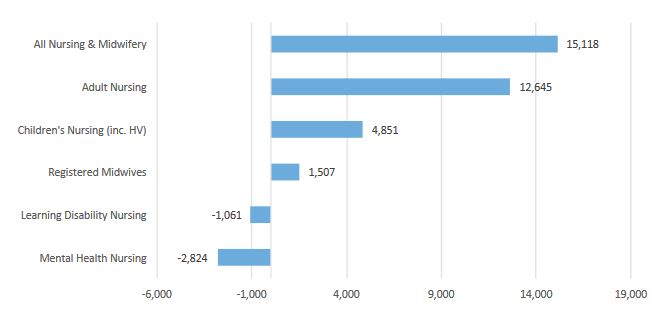
 Suffice to say that this has been the most peculiar of months. Large parts of the last four or five weeks have been spent on picket lines, at rallies, in community teach-outs and working to contract. I’ve joined with friends, old and new, in support of
  In other news, this month I was pleased to see the publication of the National Institute for Health Research (NIHR) Dissemination Centre’s
 Ben Hannigan's blog