Category: People

Critical junctures goes green

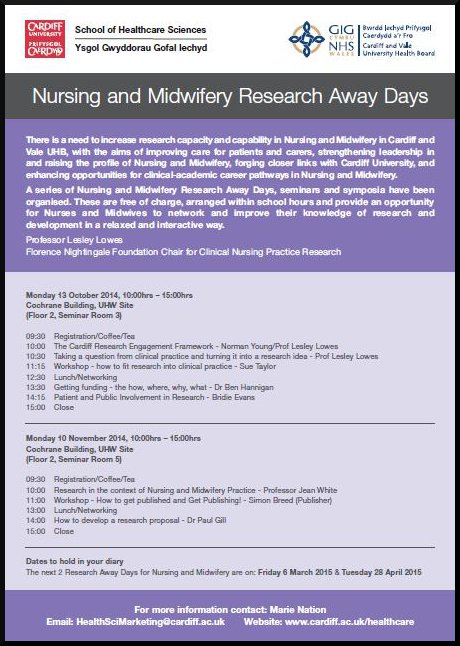
CJIn a series of earlier posts on this site (here and here), and in a piece for the LSE’s Impact Blog here, I wrote about Nicola Evans‘ and my article, ‘Critical junctures in health and social care: service user experiences, work and system connections’. This is published in the journal Social Theory & Health, and the behind-the-paywall link to the full text can be found here. Now that 18 months has passed since the article first appeared online, Palgrave’s copyright rules allow a post-peer-review, pre-copyedit, green open access version of the full text to be made publicly available. So, for a free copy of the paper downloadable from Cardiff University’s ORCA repository the link to follow is this:

Hannigan B. and Evans N. (2013) Critical junctures in health and social care: service user experiences, work and system connections. Social Theory & Health 11 (4) 428-444

The paper draws on data from Nicola’s PhD, ‘Exploring the contribution of safe uncertainty in facilitating change‘, and from my post-doctoral study of crisis resolution and home treatment services, ‘Mental health services in transition‘. For a reminder of what the paper is about, here’s the abstract in full:

This article makes an original contribution through the revitalisation, refinement and exemplification of the idea of the ‘critical juncture’. In the health and illness context, a critical juncture is a temporally bounded sequence of events and interactions which alters, significantly and in a lasting way, both the experience of the person most directly affected and the caring work which is done. It is a punctuating moment initiating or embedded within a longer trajectory and is characterised by uncertainty. As contingencies come to the fore, individual actions have a higher-than-usual chance of affecting future, enduring, arrangements. These ideas we illustrate with detailed qualitative data relating to one individual’s journey through an interconnected system of mental health care. We then draw on observations made in a second study, concerned with the improvement of mental health services, to show how micro-level critical junctures can be purposefully used to introduce instability at the meso-level in the pursuit of larger organisational change. In addition to demonstrating why scholars and practitioners should pay closer attention to understanding and responding to critical junctures we are, therefore, also able to demonstrate how their emergence and impact can be examined vertically, as well as horizontally.

The shape of nursing?

Congratulations to Steven Pryjmachuk on his pre-Christmas election as Vice Chair, and Chair-elect, for Mental Health Nurse Academics UK. Steven works with Joy Duxbury throughout 2015 and 2016, and becomes Chair for the two years following.

During the December 2014 MHNAUK election, for which I acted as returning officer, news seeped out that Health Education England’s Shape of Caring review (led by Lord Willis) was weighing up the future of UK nursing’s four fields (mental health, adult, child, learning disability). Michael Coffey, in his last month as MHNAUK Chair, led this response sent to the Health Service Journal:

Michael Coffey
Chair of MHNAUK

11th December 2014

Dear Sir

Shaun Lintern writes in the Health Service Journal (11th December 2015) that Lord Willis, chair of the Shape of Caring review envisages changes to nurse education that would see the loss of the current branches of nursing. One of those fields is mental health nursing. Those who practise in this area provide skilled compassionate care to some of the most marginalised and stigmatised people in society. We write on behalf of Mental Health Nurse Academics UK a group consisting of representatives of 65 Higher Education Institutions providing education and research in mental health nursing. As people long experienced in this field we are disappointed though not surprised to read your article presenting these views on the future of nurse education. We are disappointed because the evidence for the changes that Lord Willis claims are needed is largely non-existent. We are not surprised because we have been here before and can see that despite claims to the contrary, there is no evidence that this future for nurse education will deliver what it promises.

Nurses account for the highest number of professionals providing mental health care; the median average number of nurses per 100,000 of the population working in mental health is 5.8, more than all other professionals combined (WHO, 2011), making mental health nurses pivotal to the delivery of the WHO action plan. None of this is likely with a generic curriculum.

To be clear “the greater element of generalism” (which presumably means adult nursing) has been tried previously in the UK and found wanting. Internationally generalism has failed to deliver better care for people with mental health problems. The effect will be to dilute mental health nursing when there is increasing evidence that specialist knowledge, values and skills are required in the care of people with a range of long-term conditions and dementia. We remain unclear from your article what precisely is being proposed though our favoured suggestion would be for nurses to spend two years rigorously learning how to interact with people in compassionate ways that promote dignity and respect (core mental health nursing skills if you will) before launching themselves into the cold clinical world of high technology nursing.

The evidence from abroad and from evaluations here in the UK of the previous version of generalist frontloaded training (Project 2000; Robinson and Griffith 2007) show clearly that mental health nursing as a specialism suffered from a minimal focus on mental health in curricula and a depletion of mental health skills across the workforce. The strengthening of the mental health ‘field specific’ elements within the 2010 NMC standards reflected positive differences in areas such as language, the co–production of care and inter–professional practice. Any move to generic, or general (adult?) nurse ‘training’ as a start point for all will inevitably lead to a different set of values underpinning mental health nursing practice over time.

The expectation that the training of mental health nursing skills will be picked up and delivered in the workplace is without foundation despite the numerous examples to do this. The result will be that in an era of claims of parity of esteem people who use services will effectively be deprived of specialist trained nurses. Moreover, there is no evidence that current models of training are not fit for purpose or that a focus on generalist nursing skills will adequately address the needs of people with complex and enduring mental health difficulties.

The longer term effect of this approach is clear to see from countries who have moved down this road ahead of us, depleted services provided by unskilled workers, extra costs for employers in re-training and educating a workforce not fit for practice, difficulty in securing sufficient qualified staff to provide evidence based mental health care and longer term the stripping away of a set of skills in higher education that are unlikely to be replaced.

We don’t know what advice Lord Willis has taken to come to his view. Our worry though is that already the language being used here is designed to undermine professional skills that have been long in the making. For example, the unhelpful rhetoric embodied in the use of the term “silo” downplays specialist skills for the purposes of promoting something far less specific like “flexibility”. It is a largely hollow rhetoric and is never heard in relation to cardiologists, neurosurgeons or diabetes nurses. It seems that the pressure for change then is not one premised on the needs of people using healthcare services nor one based on the evidence of what works but driven by other factors that choose to position specialist nursing skills (and by corollary those who need these skills) as having little value.

We also note that any modification to the NMC’s standards for pre-registration nursing education and to the four fields driven by the Shape of Caring review will be felt across all parts of the UK. As an HEE-sponsored Review we are concerned that voices from parts of the UK other than England will not have opportunities to be heard.

We readily acknowledge that the full report is not yet due but wish to advance the notion of such a review democratically reflecting the voices of nurses and the people who use their services. In this regard we have been disappointed at the absence of any real attempt by the review to engage with our group specifically and have questions about the level of engagement with mental health service users more generally.

Yours Sincerely

Dr Michael Coffey
Chair of Mental Health Nurse Academics UK
Swansea University

Professor Joy Duxbury
Chair-elect of Mental Health Nurse Academics UK
University of Central Lancashire

Professor Len Bowers
Institute of Psychiatry
Kings College London

Professor Patrick Callaghan
Nottingham University

Professor Alan Simpson
City University London

Professor John Playle
University of Huddersfield

Professor Steven Pryjmachuk
University of Manchester

Professor Hugh McKenna
University of Ulster

Professor Doug Macinnes
University of Canterbury

Professor Karina Lovell
University of Manchester

Professor Geoff Dickens
Abertay University

Dr Ben Hannigan
Cardiff University

Dr Liz Hughes
University of York

Dr John Baker
University of Manchester

Dr Mick McKeown and Dr Karen Wright
University of Central Lancashire

Dr Robin Ion and Emma Lamont
Abertay University

Dr Sue McAndrew
University of Salford

Dr Andy Mercer
Bournemouth University

Dr Naomi Sharples
University of Chester

Dr Majorie Lloyd
Bangor University

Around this time there was some debate, via email, amongst MHNAUK members centring on the kind of nurses people felt were needed for the future and how they might best be prepared for practice. Important differences in view were freely expressed. Not all who are associated with MNHAUK are in favour of the retention of mental health nursing as a pre-registration field, for example, though my reading of the flow of pre-Christmas exchanges is that most are. Joy Duxbury and Steven Pryjmachuk, I suspect, will be returning to some of this debate during their tenures.
Research away day and MHNAUK meet-up

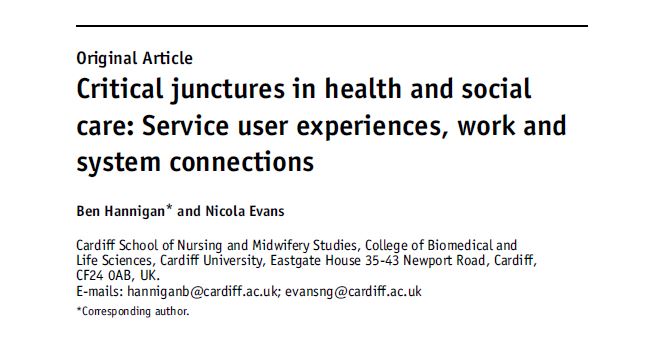
Lots of interesting things to report from a packed week. Monday took me to a meet-up with research-minded nurses from Cardiff and Vale UHB, the first of a series of events organised by Professor Lesley Lowes aimed at supporting research capacity and engagement amongst practitioners. Here’s the flyer:

Lesley's event

In her presentation, Bridie Evans made use of a segment from a NISCHR CRC video introducing the work of Involving People. This has been uploaded to the NISCHR CRC YouTube channel, where the part Bridie used begins at around the 1:53 mark:

https://www.youtube.com/watch?v=IvIgtPSUwAA

Yesterday was the first Mental Health Nurse Academics UK meeting of the 2014-15 academic year. We convened in Manchester, with public involvement and engagement in mental health research and education the theme for the pre-business part of the day. Lauren Walker and Lindsey Cree led with an excellent presentation drawing on their service user and carer researcher experiences working on the Enhancing the Quality of User Involved Care Planning in Mental Health Services (EQUIP) study. Steven Pryjmachuk and I talked about our experiences of involving young people in research, drawing on Steven’s self-care project and our shared RiSC study. John Baker closed this part of the day with an impressive University of Manchester case study of how public and patient involvement in research and education can be embedded at institutional level.

Elsewhere in yesterday’s MHNAUK meeting there was a lively discussion around the promotion of physical health and well-being in people using mental health services, and a review of this year’s NPNR conference. Plans are also being laid for next year’s event, with opportunities about to be notified for people interested in becoming more involved via membership of the conference organising committee.

Voting for mental health

In this post I underestimated the number of charities which specifically fund mental health research. Last week Hugh McKenna sent a message to members of Mental Health Nurse Academics UK alerting us to the Alliance of Mental Health Research Funders, and particularly to this group’s Prioritising Mental Health Research manifesto produced ahead of next year’s general election.

I count 13 members of the Alliance, and read this from the about section of the organisation’s website:

We are a group of charities and foundations that support mental health research. We meet regularly to share progress and generate new ideas for improving mental health research in the UK. We believe that more and better research is urgently needed to find ways of promoting good mental health, treating mental health problems, and supporting the wellbeing of individuals, families and communities. Research can help people with mental health problems, and those around them such as family members or friends, practitioners and leaders of organisations, to find solutions so individuals can enjoy better health and longer, more fulfilling lives.

In its 2015 manifesto the AMHRF says:

We all know someone with a mental health problem and can see how lives would be improved with better treatments and support and less stigma. Mental health research saves lives, relieves significant distress
and improves quality of life. It also benefits the whole of our society by generating social and economic benefits that contribute to thriving communities built upon resilience, reduced levels of mental ill-health and less stigma and discrimination.

Yet mental health research is underfunded and under-prioritised by government. We are missing opportunities to achieve breakthroughs seen in other areas of healthcare that could transform people’s lives and enhance wellbeing.

The 2015 General Election is a landmark opportunity for political parties to build on growing public awareness of mental health and the value of all health and social care research.

The Alliance is right about a growing public awareness of mental health issues, and its message on underfunding is an important one which deserves to be heeded. The LibDems have promised to include a commitment to increasing mental health research in their 2015 manifesto, and other parties (including those with a chance of forming a government) might consider following suit. Personally I would like to see this wrapped up in a more overarching promise to invest properly in mental health across the board, including in services. Elsewhere this week announcements have been made of extra funds to reduce waiting times for mental health care in England. This is a good thing, but needs to be seen in the context of persistent cuts to the mental health system over the lifetime of this government which have  had serious implications for people left in need.

NPNR 2014 reflections

For those not at the 20th International Network for Psychiatric Research Conference, which took place yesterday and the day before at Warwick University, here are links to the conference brochure and the book of abstracts. Following this link takes you to Laura Benfield’s aggregation of #NPNR2014-tagged tweets. Laura, I hear, is moving on from the RCN Events team: many thanks to her for all the behind-the-scenes work at this, and previous, conferences.

This was another high-quality NPNR gathering. Brendan McCormack gave an impassioned keynote on person-centred care, emphasising the absolute importance of values and culture, and Julie Repper spoke eloquently on co-production and the vital work that mental health nurses can do to promote this. Debbie Hicks talked of the work of The Reading Agency in using books to promote mental health and wellbeing. In his Friday morning keynote Swaran Singh gave a presentation which had, at its heart, the idea that higher recorded rates of mental illness in migrant groups are better explained by experiences of social adversity than they are by institutionalised racism. Kevin Ann Huckshorn delivered a final keynote centring on leadership and the implementation of recovery and coercion-reducing approaches.

I also sat in on, and chaired, some excellent concurrent sessions. From speaking with fellow delegates I know that I missed plenty of others of equal quality. From Fiona Nolan and colleagues I learned of the latest in the development and evaluation of protected engagement time initiatives, and from Hilary Ford of the use of a lifecourse approach in pre-registration mental health nurse education. I always appreciate what Mick McKeown has to say, and this year heard Fiona Jones and him talking about the opportunities (and challenges) of introducing recovery ideas in a secure hospital. I heard Brenda Happell deliver two papers: on the relationships between clinical experiences in mental health settings and nursing students’ attitudes to mental health as a field of practice, and on the introduction and evaluation of a service user-led module. Iain Hepworth and Peter Martin both gave talks touching on the work of liaison mental health nurses, and Alan Finnegan presented findings from a grounded theory study of military mental health nurses. Hilary Wareing shared experiences in introducing smoke-free mental health services, Hannah Walsh and colleagues talked of education and training for clinical support workers, and last (but certainly not least) Len Bowers shared his thoughts on (and experiences of) online suicide prevention education for mental health nurses.

I was also mightily pleased to have had the chance to be involved in four papers, each arising from funded research ongoing or recently completed and drawing on the talents and experiences of the fine people variously associated with COCAPP, Plan4Recovery and RiSC. We were there in force in Warwick: Alan Simpson, Michael Coffey, Sally Barlow, Jitka Všetečková, Bethan Edwards, Alan Meudell, Julian Hunt, Nicola Evans and Steven Pryjmachuk. Many thanks to those who came along to listen to, and discuss, our project experiences and our findings.

The NPNR conference is also the place where the following year’s JPMHN Lifetime Achievement Award winner and Skellern lecturer are announced. Very big congratulations to Ian Norman (who, as it happens, was one of my PhD examiners) and to Marion Janner, both of whom will be delivering their addresses at Nottingham University on June 11th 2015.

It’s worth mentioning, too, that the annual NPNR conference has a deserved reputation for informal collegiality and friendliness, and this year was no exception. I enjoyed meeting up with friends old and new.

Looking ahead, I see that an early call for suggested themes for NPNR 2015 has already gone out:

I, for one, plan to be there.

NPNR 2014

I’m off to Warwick University tomorrow, leaving on a too-early train, for this year’s International Network for Psychiatric Nursing Research Conference. This is the NPNR’s 20th edition, and here (lifted shamelessly from the event website, accessible by following the link directly above) is a taster of what’s on offer:

Themes for 2014

Contemporary practice in mental health nursing research

Involving people – where has it got us?

Reflections and reminders

Building new knowledge for effective partnerships

Methodologies, methods and magic

Innovation in teaching, learning and practice

Keynote speakers

Thursday 18 September

Person-Centre Care: Collaborative practice and research

Professor Brendan McCormack, Head of Nursing at Queen Margaret University, Edinburgh

Co-production and the future role of Mental Health Nursing  

Dr  Julie Repper, Recovery LeadNottingham Healthcare Trust, Nottingham, UK

Mental health and Wellbeing: Books on Prescription

Debbie Hicks, Director of Research, The Reading Agency

Friday 19 September

Understanding Pathways to Care in Early  Psychosis                         

Professor Swaran P Singh, Head of Division, Mental Health and Wellbeing, Warwick Medical School, University of Warwick, Coventry, UK

The Role of Leaders in Designing Recovery Oriented Systems of Care: Upsetting the Historical Applecart

Dr Kevin Ann Huckshorn, State Division, Director for the Division of Substance Abuse and Mental Health, Delaware, USA

I’ll aim to tweet from Warwick whilst I’m there. To join in the conference-wide discussion, here’s some info from the @MHNAUK Twitter feed:

Parity of esteem?

Today’s Guardian interview with Professor Simon Wessely, President of the Royal College of Psychiatrists, reveals how large the mental health care and treatment gap has become. Professor Wessely draws comparisons between mental health and cancer services, saying:

“People are still routinely waiting for – well, we don’t really know, but certainly more than 18 weeks, possibly up to two years, for their treatment and that is routine in some parts of the country. Some children aren’t getting any treatment at all – literally none. That’s what’s happening. So although we have the aspiration, the gap is now so big and yet there is no more money,” he said.

Wessely said there would be a public outcry if those who went without treatment were cancer patients rather than people with mental health problems. Imagine, he told the Guardian, the reaction if he gave a talk that began: “‘So, we have a problem in cancer service at the moment. Only 30% of people with cancer are getting treatment, so 70% of them don’t get any treatment for their cancer at all and it’s not even recognised.”

NHS England places considerable emphasis on ‘parity of esteem‘, with the Improving Access to Psychological Therapies (IAPT) programme intended to be a one, key, part of making this happen. Evidence like Simon Wessely’s, combined with (for example) BBC/Community Care investigatory evidence of cuts in services, points to a chasm between the stated intention and the frontline reality.

This lack of parity extends to research. Within the last week or so the Liberal Democrats made a promise to include in their general election manifesto a commitment to increase mental health research funding by £50m each year. It has often struck me how poorly funded mental health research is. Mental health researchers can apply for support to bodies like the NIHR and NISCHR, and many do with some success (see all my previous posts on this site relating to COCAPP, RiSC and Plan4Recovery, for example). But unlike most other areas of health care the mental health field has no large-scale, dedicated, charitable research funding. Mental Health Research UK was founded in 2008 as (it says on its website) the UK’s first charity devoted specifically to raising funds to support research into the causes and treatments of mental illness. And that’s about it, I think: unless someone is able to tell me differently?


Academics and social media

Time this evening to give a quick plug to Deborah Lupton’s Survey on academics’ use of social media. I spotted the online questionnaire when it first appeared, and was pleased to take part. Now, some months later, Deborah has published her results. Here’s the abstract from the main report, reproduced in its entirety:

This report outlines findings from an international online survey of 711 academics about their use of social media as part of their work conducted in January 2014. The survey sought to identify the tools that the respondents used, those they found most useful and the benefits and the drawbacks of using social media as a university faculty member or postgraduate student. The results offer insights into the sophisticated and strategic ways in which some academics are using social media and the many benefits they have experienced for their academic work. These benefits included connecting and establishing networks not only with other academics but also people or groups outside universities, promoting openness and sharing of information, publicising and development of research and giving and receiving support. While the majority of the respondents were very positive about using social media, they also expressed a range of concerns. These included issues of privacy and the blurring of boundaries between personal and professional use, the risk of jeopardising their career through injudicious use of social media, lack of credibility, the quality of the content they posted, time pressures, social media use becoming an obligation, becoming a target of attack, too much self-promotion by others, possible plagiarism of their ideas and the commercialisation of content and copyright issues. The report ends by contextualising the findings within the broader social and political environment and outlining areas for future research.

The report makes for an interesting read. For those looking for a condensed-but-longer-than-an-abstract version, follow this link for Prof Lupton’s accompanying piece for The Conversation website.

2014 Skellern Lecture, JMPHN Lifetime Achievement Award and MHNAUK meet-up

Last week brought a trip to London for a series of events: a COCAPP update on framework analysis; a COCAPP project advisory group meeting; the 2014 Skellern Lecture and the Journal of Psychiatric and Mental Health Nursing Lifetime Achievement Award; and this term’s meeting of Mental Health Nurse Academics UK.

Gary Winship, who does an excellent job organising the Skellern and JPMHN events, wrote this piece on the MHNAUK blog ahead of the lectures taking place at the Institute of Psychiatry. He wrote how Professor Joy Duxbury in her Skellern Lecture:

…will endeavour to balance the evident need for improved compassionate based care against a backdrop of risk aversion [and will place] a particular focus on coercive practices, more specifically restraint in mental health settings.

And that was exactly what Joy did on the night. She lined up, and tackled, the reasons mental health nurses give for using physical restraint and using video evidence drew her audience’s attention to what can go wrong. This includes patient deaths, something which the national charity Mind has been campaigning about since last year (see this post from June 2013) and which has helped drive the Department of Health’s guidance on positive and proactive care.

Professor Hugh McKenna took a break from his REF duties as Chair of the Allied Health Professions, Dentistry, Nursing and Pharmacy sub-panel to receive this year’s JPMHN Lifetime Achievement Award. Here’s Gary Winship’s preamble from the MHNAUK site:

Professor McKenna has a long and illustrious career. He was appointed an International Fellow of the American Academy of Nursing in 2013 which is an accolade accorded to very few people outside the USA. He was made an Honorary Fellow of the Royal College of Surgeons in Ireland (1999), Fellow of the Royal College of Nursing (2003) and Fellow of the European Academy of Nursing Science (2003). In 2008, Professor McKenna received a CBE for contributions to health care and the community, and in the same year he was appointed to Chair the Nursing Panel in the 2008 Research Assessment Exercise.

Hugh delivered a personable, good-humoured, lecture which also contained some important messages for nurses aiming to build programmes of research. These included the importance of working collaboratively and across disciplinary boundaries, aiming high, and getting funding. These are all things which Hugh has excelled at in his own career, though he was far too modest to draw explicit attention to this himself. Many congratulations both to him and to Joy: two recipients very worthy of their awards.

Following events on June 11th, the 12th brought the final meet-up in the current academic year of Mental Health Nurse Academics UK, convened on this occasion at London South Bank University. The morning was devoted to these presentations:

Colin Gale, Archivist, Bethlem Museum of the Mind
As if to, drive me mad: an Edwardian’s experience of sedatives and the asylum

Tony Leiba, Emeritus Professor, LSBU
Lessons of social inclusion through policy

Tommy Dickinson, Lecturer, Manchester University
‘Curing Queers’: giving a voice to former patients who received treatments for their ‘sexual deviations’, 1935-1974

The afternoon saw MHNAUK members get down to business. This included a discussion, led by Andy Mercer, on how best to influence the latest round of nursing reviews including the Shape of Caring and The Lancet Commission on UK Nursing. Elsewhere on the agenda were updates on this year’s Network for Psychiatric Nursing Research conference, MHNAUK’s in-progress position paper on physical health and well-being (led by Patricia Ryan-Allen and Jacquie White) and possible journal affiliations.


London calling

Time this evening to note tomorrow’s COCAPP project advisory group meeting (to be held at City University London), to be followed by a trip to the Institute of Psychiatry to hear the delivery of this year’s Eileen Skellern Lecture by Professor Joy Duxbury and Professor Hugh McKenna’s acceptance of the JPMHN Lifetime Achievement award. Time, too, to note Thursday’s meeting of Mental Health Nurse Academics UK at London South Bank University.

So, lots to talk about and listen to.