Suffice to say that this has been the most peculiar of months. Large parts of the last four or five weeks have been spent on picket lines, at rallies, in community teach-outs and working to contract. I’ve joined with friends, old and new, in support of decent pensions for university staff. The Wikipedia page dedicated to the current dispute reports that the strikes are the most sustained to have ever taken place in UK higher education. A first offer to University and College Union members to end the action having been rejected, with the prospect of a further 14 more days of strikes across campuses looming a new offer has been tabled today (March 23rd). Next week will be critical, I suspect.
Elsewhere, I managed to disappear to the always-spectacular Cornwall for a week. That’s where the photograph above of the boat was taken. In the world of mental health nursing research, preparations for #MHNR2018 are now in full swing, with more information (including on abstract submission) to be found here. Our theme for this year’s conference is Place, Purpose and Politics: Re-imagining Mental Health Care, and we’ll be at the Museum of Science and Industry in Manchester on September 13th and 14th. Our confirmed keynote speakers are excellent in every way: Dr Eleanor Longden, Professor Sir Robin Murray, Dr Jonathan Gadsby and Professor Sonia Johnson. The fifth keynote speaker is…
…potentially you, reader. For the second year running we’re inviting nominations to deliver the Annual Mental Health Nurse Academics UK Lecture. This is a super opportunity for a mental health nurse who has made a significant contribution to the promotion and enhancement of mental health nursing education, research, policy and/or practice to speak at a major international event. Don’t be shy!
In other news, this month I was pleased to see the publication of the National Institute for Health Research (NIHR) Dissemination Centre’s Forward Thinking themed review of research on support for people living with severe mental illness. I was a member of the project steering group for this piece of work, and the finished product is a fine resource indeed. I commend it to all those interested in the evidence base for mental health services and interventions, and am also pleased to report that the review included many studies led by, or otherwise involving, researchers with backgrounds in mental health nursing: Safewards, the City 128 extension, SPICES, RiSC, COCAPP, COCAPP-A, RESPECT.
Paul Brown, me, Graeme Paul-Taylor: thanks to Kerry Hood for the photo.
I have a fantastic job, which I enjoy very much. But today I haven’t been doing it. I came into it in 1997, leaving a post as a community mental health nurse in East London to relocate to South Wales as a Lecturer in Community Nursing at what was then the University of Wales College of Medicine (UWCM). As a family we made this move even though my initial contract was fixed for a two year term. It was renewed for a further two years, and only then did I become a permanent member of staff. As part of making my transition from the NHS into higher education I transferred my health service pension into the Universities Superannuation Scheme (USS).
I was recruited into UWCM with the chief responsibility of leading a full-time, post-registration, course preparing nurses to work in community mental health settings. I led that programme for 14 years, and over that time taught many hundreds of registered nurses and helped them on their way towards specialist, regulatory body-approved, qualifications. I have continued to contribute to, and to lead, modules involving many other groups of health care professional students, all the way from pre-registration undergraduate through to post-registration postgraduate. I have supervised and assessed umpteen student dissertations, and have supervised and examined many postgraduate researchers. I very much value my work with students, and think that I’m reasonably good at it.
Then there are the other bits of my job, which nowadays occupy as much, or more, of my time as teaching and teaching-related activities. Over the years I have become a researcher, working with excellent colleagues here and elsewhere on projects examining features of the mental health system. I help with the running of the School of Healthcare Sciences as a manager and mentor of valued colleagues, and contribute to the work of a large number of committees and groups. I do work external to Cardiff University, including with Mental Health Nurse Academics UK, at other higher education institutions as an external examiner, and for journals and funding bodies as a reviewer of manuscripts and grants.
Like all the academics I know I work long hours, and accept that my job comes with high expectations. These include securing research income and publishing excellent research papers. For me, 10 to 12 hour working days are exceptionally usual, with far fewer (but certainly not non-existent) hours spent working at weekends. It is easy to become absorbed in what I do. I respond quickly to requests for help and feedback from students and colleagues, and if I’m chipping away at a grant application or a paper for publication can soon become engrossed in the task at hand. Oddly, whilst the hours are long it doesn’t always feel that way, and I appreciate the benefits of being able to work away from the office and to have control over my diary. All in all, I do my best across the full range of activities associated with being an academic. And, as I wrote at the outset of this post I enjoy what I do, and enjoy doing it in Cardiff.
Having committed myself to university life for over two decades I conclude that it suits me well, and find it hard to imagine doing anything else until I retire. Which brings me to today. I’m far from being the most active of Union members, and from time-to-time have had my gripes about the University and College Union (UCU). But today I downed tools to join colleagues up and down the country on strike, as a protest against threats to dismantle our pensions. At the heart of the dispute is a highly contested valuation of the USS fund, and a proposal to move from a defined benefits to a defined contribution scheme. This means a potential loss in retirement of up to £10,000 per year for USS members. Here’s a useful leaflet explaining this in a little more detail:
And for those wanting more on the technical front, there’s this blogpost which I personally found very informative.
Academics are paid modestly considering the qualifications and transferable skills they have, and as I have demonstrated here put the hours in to get the job done. Many, as I did, put up with time-limited contracts in the earlier parts of their careers. We care about our students and our research. We take additional satisfaction when our work makes a contribution to society. In my field this is through the preparation of future health care professionals, and via generating an evidence base for the improvement of practice and services. In return, having a decent pension – of the kind I and others signed up for when we first came into the university sector – does not seem like much of an ask.
I also remain acutely aware of how much more precarious the position is of younger academics. If proposed pension changes go through, people in the future will enter university employment with only defined contribution USS pension arrangements as preparation for their eventual retirements. First saddled with student debt, these are talented individuals who will be employed in their early working years on fixed-term contracts, ahead of settling into careers characterised by working weeks of 60 hours or more for salaries falling far short of a king’s ransom. A working life over, they (and not their employers) will have carried all the risk to secure pensions the value of which will reflect, quite terrifyingly, the fluctuations of the stock market. It isn’t right.
In previous posts (see here and here) I’ve written about Mohammad Marie’s PhD, which investigated resilience in Palestinian community mental health nurses. A fourth paper derived from this study has just been assigned to the January 2018 issue of the journal Health. This is a review of literature, and addresses (amongst other things) the connections between resilience and the idea of ‘Samud’. By following this link a gold open access version of the paper can be downloaded for free.
Elsewhere, I realise I have neglected to add any recent updates on this site about the work of Mental Health Nurse Academics UK. Last year was an active one. In addition to our usual three meetings we exercised our responsibilities as a Research Excellence Framework nominating body, and responded to a variety of consultations and calls for evidence: a nursing workforce inquiry initiated by the House of Commons Health Select Committee; the Nursing and Midwifery Council‘s proposed standards for education; both NHS Improvement and Centre for Mental Health reports on the mental health workforce; and more besides. Our meetings for this year are all scheduled, and it will be good to catch up in Birmingham in February, Greenwich in June and Essex in October.
On November 6th 2017 the School of Healthcare Sciences welcomed Alan Simpson from City, University of London to give a talk titled, Full-steam ahead or treading carefully? Reflections on public and patient involvement in health services research.
In warm and engaging style Alan drew on a whole programme of mental health research (including the City 128 study, Safewards, COCAPP, COCAPP-A and ENRICH) to share his experiences of involving service users at every step. Alan began with an exploration of the reasons for involving patients and the public in research, and drew on his case studies to provide examples of different methods and approaches in action. He closed with lessons learned, emphasising the importance of time, resources, flexibility, training and support, and having funds to pay people for their time and expertise.
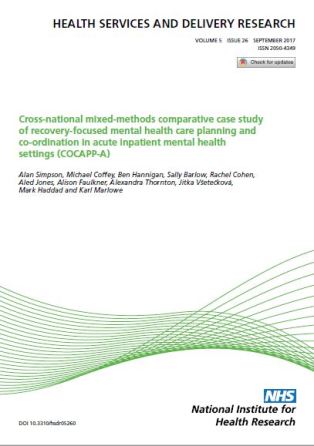
The full and final report from COCAPP-A has been published, and can be downloaded here. Led by Alan Simpson, this cross-national comparative case study investigated inpatient mental health care planning and coordination and their relationships to recovery and personalised care in six NHS organisations in England and Wales. COCAPP-A is the partner project to COCAPP, which asked similar questions about community mental health care in the same six sites.
The full COCAPP-A report is a substantial document, but also comes with summaries. Here’s the plain English one to give people a flavour:
Care planning processes in mental health wards should be personalised, conducted in collaboration with service users and focused on recovery.
We conducted a study on 19 wards in six NHS mental health hospitals in England and Wales. Over 330 service users, 320 staff and some carers completed questionnaires and took part in interviews. We also reviewed care plans and care review meetings.
We aimed to identify factors that helped staff in, or prevented staff from, providing care that was discussed with service users and that supported recovery.
When the ward seemed more recovery focused, service users rated the quality of care and the quality of therapeutic relationships highly. Staff rated the quality of relationships with service users better than did service users.
Staff spoke of the importance of involving service users in care planning, but from both interviews and care plan reviews it appeared that, often, this did not happen. Staff were trying to work with people to help their recovery, but they were sometimes unsure how to achieve this when service users were very distressed or had been detained under the law. Service users and carers often said that care was good and provided in an individualised way. Keeping people safe was important to staff, and service users were aware of measures taken to keep them safe, although these were not always discussed with them.
Our results suggest that there is widespread commitment to safe, respectful, compassionate care. The results also support the need for research to investigate how staff can increase their time with service users and carers, and how they can involve people more in discussions about their own care and safety.
There’s plenty of work ahead with journal articles to be produced, derived from the larger document. As the COCAPP and COCAPP-A teams now have community and hospital data relating to the same organisations we also have the opportunity to draw conclusions from both studies. This work has already commenced: Michael Coffey and Sally Barlow have taken a paper titled, ‘Barriers to, and facilitators of, recovery-focused care planning and coordination in UK mental health services: findings from COCAPP and COCAPPA’ to this year’s #MHNR2017, Refocus on Recovery and ENMESH conferences.
Cardiff welcomed delegates to the 23rdInternational Mental Health Nursing Research Conference (#MHNR2017), which took place at City Hall on September 14th and 15th 2017. This was the conference’s first visit to Wales, with the theme for the year being Imagination, Invention and Inquiry. Papers were welcomed emphasising the need for new ideas, new research and new ways of providing services. As a curtain-raiser, with the involvement of André Tomlin (aka The Mental Elf), keynote speakers took part in a pre-conference streamed webinar which can still be viewed here.
#MHNR2017 (which, as readers of this blog will know, was until last year known as the Network for Psychiatric Nursing Research Conference), was again organised jointly by Mental Health Nurse Academics UK (MHNAUK) and the Royal College of Nursing. It remains the UK’s leading annual event of its kind. I was pleased to serve as chair of the conference steering committee for this year, and got to open proceedings with a short welcome address.
Across the two days keynote speakers (all of whom were live streamed: see below) were Professor Joy Duxbury, who drew on her programme of research into reducing restrictive practices; Dr Phil Cooper, Danny Sculthorpe and Jimmy Gittins who gave inspirational talks drawing on the personal experience of mental distress and their work with State of Mind; Dr Jay Watts, who challenged delegates to embrace the idea of trauma-informed care; Dr Michael Coffey, who spoke as one of two inaugural MHNAUK Lecturers about the problem of assessing risk; Professor Paul French, also an inaugural MHNAUK Lecturer, who talked about his programme of research into psychosis; and Professor Gary O’Reilly who introduced his research into the use of computer games as a vehicle for the provision of psychological therapies for young people with mental health difficulties.
Here are the saved live streams from our excellent keynotes for those who are interested. Eventually we’re hoping to upload higher quality recordings to our conference YouTube account:
#MHNR2017 also provided an opportunity for Cardiff academics to showcase their research and engagement activities. Dr Nicola Evans talked of her work with colleagues in Canada and Australia on benchmarking competencies for mental health nurses working in child and adolescent mental health services, and Alicia Stringfellow and Gemma Stacey-Emile talked of their work promoting mental health and wellbeing in Grangetown through the Community Gateway project. John Hyde presented his research into the boundaries between community mental health teams and crisis resolution and home treatment services. On behalf of the team led by Professor Jon Bisson I introduced the ongoing 3MDR for treatment resistant post-traumatic stress disorder study. I also presented a new (and in-progress) analysis from COCAPP of the practice and processes of care coordination, and introduced a paper uniting theory, design and research methods for the study of complex mental health systems.
Elsewhere I heard some outstanding presentations from colleagues elsewhere in the UK and around the world, and was particularly heartened to listen to and to meet student nurses. Thanks for coming, everyone.
Planning for #MHNR2018 will begin shortly, with updates available via the conference twitter account which can be found here.
Time this morning for a quick post drawing attention to this new paper published in Research Involvement and Engagement reporting on our use of the nominal group technique in the now-completed RiSC study.
In this project we were interested in risk, broadly defined, for young people in inpatient mental health settings. We used a two-stage evidence synthesis, convening a stakeholder group midway through to guide us in our focus. This new article gives the detail on the process we used when the group met.
As it happens, the stakeholder meeting was a pivotal event in the life of this study, during which we were directed to find evidence on a whole range of risks which are very rarely considered in mental health services. Examples include the risks of losing contact with education, family and friends. The next step in this programme of research is a KESS2 PhD studentship which will bring to the surface all the things that child and adolescent mental health practitioners do to help young people in hospital to keep in touch. In the meantime, anyone wanting to know more about the RiSC study (should their appetite have been whetted following a read of this new article) might want to follow this link for our main findings paper and this link for our accessible summary.
The Nursing and Midwifery Council is consulting on its programme of change for education. Information can be found here, and there’s a lot of it. Mental Health Nurse Academics UK (MHNAUK) will be submitting a response, with Anne Felton from Nottingham University (who leads MHNAUK’s Education Standing Group) coordinating this work.
On July 11th, with mental health nurse academic colleagues in the School of Healthcare Sciences in Cardiff I spent part of our annual summer away day formulating a team response to the NMC’s proposals. Once we’re happy with the content we’ll be forwarding it to Anne, and simultaneously submitting directly to the NMC.
Individually and collectively, other mental health nurses will be formulating responses too. For now, the NMC confirms that the four nursing fields (mental health, adult, child and learning disability) will remain. For an explanation of the importance of preserving mental health nursing as a pre-registration speciality, follow this link for MHNAUK’s relevant position paper. But, as MHNAUK Chair Steven Pryjmachuk pointed out last month in this piece (£) for the Nursing Times, the list of nursing procedures contained in the NMC’s draft standards of proficiency is heavily skewed towards the adult field. This is the Cardiff University mental health team’s concern too, and we’ll be saying so (with specific examples) in our response. Another place for this (and any other) view to be given is at this forthcoming WeMHNurses chat:
Meanwhile, last week ended with two days of professional doctorate teaching. With Nicola Evans I lead a module which addresses working in, and examining, complex systems of health and social care. We’ve run this module before, and as always the student group was a lively and engaged one. Amongst the things we discussed together are the connections running within and between systems of different scale, and the sometimes unforeseen consequences of introducing change. These are matters about which both Nic and I have written (see here, here, here and here).
To link the two parts of this post together: the NMC is a big player, and for better or worse its programme of education reform will trigger significant disruption. A systems thinking perspective encourages us to consider the possible impact of the NMC’s proposals alongside other sources of change. These include the introduction of fees for student nurses in England, the arrival of nursing associates and reductions in the size of the UK’s registered nurse workforce. As cumulative shifts take place I’m hoping mental health nursing as a distinct profession emerges intact, with its current and future practitioners able to fulfil their places in a system which continues to very much need them.
As Skellern Lecturer Mary Chambers gave a fine, interactive, presentation emphasising the importance of making visible the invisible work of mental health nurses. Here’s Mary with Ben Thomas and Isaac Marks, no less. Amongst other things Mary talked about her work developing the Therapeutic Engagement Questionnaire, a tool designed to establish the value of mental health nursing.
Len Bowers was recipient of the Lifetime Achievement Award. He gave a deeply personal, altogether humorous, account of his career in mental health nursing, highlighting in particular the curious accidents which helped propel him to the forefront of the profession. Len’s Safewards programme, of course, was no accident and his contribution to improving mental health nursing practice through research of this type continues to be sorely missed in the months following his retirement. Here he is receiving his award from Alan Simpson.
Friday was a meeting of Mental Health Nurse Academics UK, hosted by Sally Hardy at London South Bank University. Detailed notes from the meeting will appear in due course on the group’s website. In the morning Katie Evans from the Money and Mental Health Policy Institute talked about the associations between mental health problems and money difficulties, making the point that debt advice (which is a regulated activity) needs to be incorporated into care pathways where necessary.
MHNAUK is in the process of setting up permanent standing groups, covering the areas of: research; education; policy and practice; and communication. Each group now has a lead person, and each group has plenty to do. The education group, led by Anne Felton, will be coordinating MHNAUK’s response to the NMC’s consultation on proposed new standards for pre-registration nurses. At this last week’s meeting, under the education group agenda item, members heard about plans for this autumn’s #FutureMHN conference. The research group, led by Mary Chambers, will be coordinating MHNAUK’s work in the context of the future Research Excellence Framework. On Friday, as part of the research group update I gave a progress review for this year’s #MHNR2017 conference. The policy and practice group is led by John Baker, and members (John included) have been working on (amongst other things) safe staffing. The final group is communications, led by Steven Pryjmachuk and me.
 Suffice to say that this has been the most peculiar of months. Large parts of the last four or five weeks have been spent on picket lines, at rallies, in community teach-outs and working to contract. I’ve joined with friends, old and new, in support of decent pensions for university staff. The Wikipedia page dedicated to the current dispute reports that the strikes are the most sustained to have ever taken place in UK higher education. A first offer to University and College Union members to end the action having been rejected, with the prospect of a further 14 more days of strikes across campuses looming a new offer has been tabled today (March 23rd). Next week will be critical, I suspect.
 In other news, this month I was pleased to see the publication of the National Institute for Health Research (NIHR) Dissemination Centre’s Forward Thinking themed review of research on support for people living with severe mental illness. I was a member of the project steering group for this piece of work, and the finished product is a fine resource indeed. I commend it to all those interested in the evidence base for mental health services and interventions, and am also pleased to report that the review included many studies led by, or otherwise involving, researchers with backgrounds in mental health nursing: Safewards, the City 128 extension, SPICES, RiSC, COCAPP, COCAPP-A, RESPECT.
 Happy new year. In December 2017, I was pleased to see
  In previous posts (see
  On November 6th 2017 the
  October has been a month of external events. These began with the inaugural All Wales Mental Health Nursing and the
  The full and final report from COCAPP-A has been published, and can be downloaded
  Cardiff welcomed delegates to the 23rd
  Time this morning for a quick post drawing attention to this
  The Nursing and Midwifery Council is consulting on its programme of change for education. Information can be found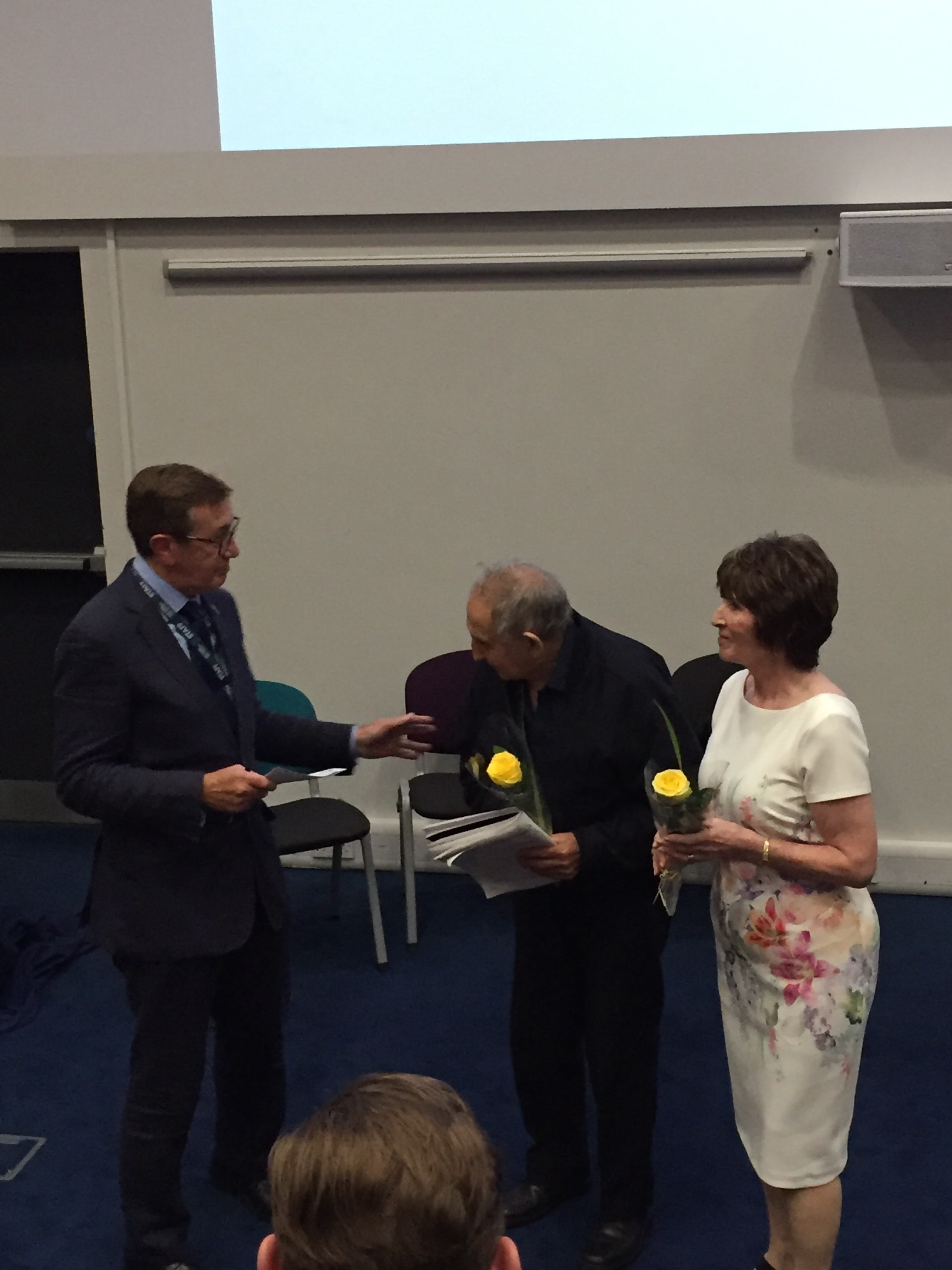

 Ben Hannigan's blog