 Here’s a post introducing the main findings paper from the Plan4Recovery study, led by Michael Coffey and funded through a Health and Social Care Wales Social Care Research Award.
Plan4Recovery used qualitative and quantitative methods to investigate the relationships between recovery, quality of life, social support and shared decision-making amongst people using social care services in Wales. The project team included mental health researchers with practitioner backgrounds, experience of using services, and of mixed methods studies. The paper, published in the journal Social Psychiatry and Psychiatric Epidemiology, is in gold open access form which makes it free to download.
For a shortcut, here’s the abstract:
Follow @benhanniganPurpose
Mental health care is a complex system that includes social care organisations providing support for people with continuing needs. The relationship over time between decisional conflict, social support, quality of life and recovery outcomes across two time periods for people experiencing mental health problems in receipt of social care was investigated.
Methods
This is a mixed methods study comprised of a quantitative survey at two time points using measures of decisional conflict, social support, recovery and quality of life in a random sample (n = 122) using social care services in Wales, UK. In addition, 16 qualitative case studies were developed from data collected from individuals, a supportive other and a care worker (n = 41) to investigate trajectories of care. Survey responses were statistically analysed using SPSS and case study data were thematically analysed.
Results
Participants reported increasing decisional conflict and decreasing social support, recovery and quality of life over the two time points. Linear regression indicated that higher recovery scores predict better quality of life ratings and as ratings for social support decline this is associated with lower quality of life. Correlational analysis indicated that lower decisional conflict is associated with higher quality of life. Thematic analysis indicated that ‘connectedness and recovery’ is a product of ‘navigating the system of care’ and the experience of ‘choice and involvement’ achieved by individuals seeking help.
Conclusions
These results indicate that quality of life for people experiencing mental health difficulties is positively associated with social support and recovery and negatively associated with decisional delay.
 Here are two digital mementos from my trip to Australia: a photograph of a humpback whale (which breached and swam under the boat I was on for a good 45 minutes), and – more pertinently, perhaps, given the usual subject matter of this blog – the slides I used in my keynote talk at
 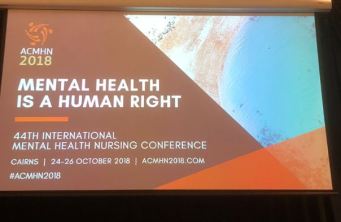 Big thanks to the Board of Directors of the
  Earlier this month I made the journey to the
  In July 2018, in the context of


 Today I’ve been at this year’s meeting of the
  Mental health nursing is important and fulfilling work, and offers a fine and rewarding career. More people also need to be doing it. By way of background, last month Mental Health Nurse Academics UK (MHNAUK) submitted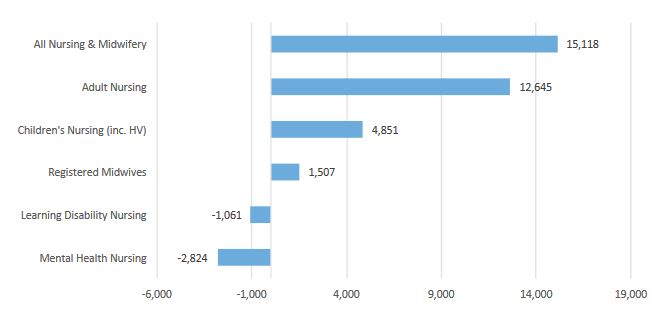
 Suffice to say that this has been the most peculiar of months. Large parts of the last four or five weeks have been spent on picket lines, at rallies, in community teach-outs and working to contract. I’ve joined with friends, old and new, in support of
  In other news, this month I was pleased to see the publication of the National Institute for Health Research (NIHR) Dissemination Centre’s
