Category: Research

Summer research summary

Si3mdrnce returning from a week of walking August has included making final preparations for #MHNR2019, which is looking very exciting. Elsewhere, a big part of my work this month has been writing an analysis of qualitative interview data generated as part of a phase 2 trial of 3MDR for military veterans with treatment-resistant post-traumatic stress disorder. 3MDR, or Modular motion-assisted memory desensitisation and reconsolidation, is a novel psychological intervention involving walking on a treadmill towards personally selected images of trauma whilst in the company of a skilled therapist. The study is led by Jon Bisson, and here are Neil Kitchiner and John Skipper talking about what it involves:

Working on a trial has been an interesting, and new, experience for me, and I’ve been learning lots. My qualitative write-up is destined for inclusion in a final report for the trial’s funding body, Forces in Mind Trust, but during this work as a team we’ve also been planning papers for publication.

menloc logo 5MENLOC, our ongoing evidence synthesis into end of life care for people with severe mental illnesses (about which I have written on this blog before), is in full swing. We’ve reached the stage where we’re writing up syntheses of the research papers and other outputs we’ve included, organised via a series of themes. More on this to follow in due course.

Finally, it’s been good to work in support of colleagues who have led new papers for publications. Here’s Jane Davies‘ latest paper on the experiences of partners of young people living with cancer, and a paper led by Ray Samuriwo on wound care and mental health.

May review

2019-05-20 18.41.32.jpgEarlier this month I joined colleagues at the main meeting of the #MHNR2019 scientific committee, held (as the conference itself will be) at the RCN in London. We had a good number of abstracts to work through, submitted by people from the UK, the US, Australia and elsewhere. The programme is being worked on now, and people will not have long to wait before learning the outcomes of the panel’s deliberations. As an aside, whilst the conference committee always welcomes proposals for workshops as well as for concurrent sessions, posters and symposia we were reminded, when we met, of the importance of workshops promising to make delegates work. This is doubly important given that a workshop typically occupies the same amount of time on the conference programme as do three concurrent talks: so they have to sound engaging, and interactive, and not read like a plan for a 90 minute lecture.

For me this month also included a trip to St Angela’s College in Sligo for a stint of external examining for the College’s Postgraduate Diploma in Community Mental Health Nursing. It’s a good course, attracting applicants from all around Ireland, in which students learn about recovery-focused practice, therapeutic relationships, formal therapies, the context for care and care coordination, and more besides. It’s complex work being a registered nurse, and that’s why in all parts of the world the profession is (or is becoming) a graduate one for new registrants, with specialist courses like this one in Sligo being offered at post-registration level. I mention this as, tediously, nurses (and their friends) are once again having to defend the value of an education which involves time in practice but also, crucially, study for a degree.

Finally, this is my 16th unbroken annual trip to the Hay Festival. When I was first here the event was a relatively small-scale affair, held in the town’s primary school. It’s a much bigger enterprise now, located on a site some half a mile out of town to which many thousands of visitors arrive each day. This year I’ve listened to talks and round table discussions on the interminable horror that is Brexit, the making of (and the intentions behind) Our Planet, the invasions first of the Vikings and then on D-Day, and more.

COCAPP-A main findings paper

COCAPP-ACOCAPP-A, funded by the NIHR Health Services and Delivery Research Programme, investigated care planning and coordination in inpatient mental health services. It was led by Alan Simpson, and I was mighty pleased to have been part of the research team. The full, 270 page, report appeared in 2017. Now, a derived paper reporting main findings has appeared in the journal BMC Psychiatry. Lead authored by Michael Coffey this article amounts to a more modest 18 pages, which means it stands a chance of actually being read by people able to make use of it.

As a gold open access article the paper is free to download to anyone with an internet connection. As a taster, here’s the abstract:

Background: Involving mental health service users in planning and reviewing their care can help personalised care focused on recovery, with the aim of developing goals specific to the individual and designed to maximise achievements and social integration. We aimed to ascertain the views of service users, carers and staff in acute inpatient wards on factors that facilitated or acted as barriers to collaborative, recovery-focused care.
Methods: A cross-national comparative mixed-methods study involving 19 mental health wards in six service provider sites in England and Wales. This included a survey using established standardised measures of service users (n = 301) and staff (n = 290) and embedded case studies involving interviews with staff, service users and carers (n = 76). Quantitative and qualitative data were analysed within and across sites using descriptive and inferential statistics, and framework method.
Results: For service users, when recovery-oriented focus was high, the quality of care was rated highly, as was the quality of therapeutic relationships. For staff, there was a moderate correlation between recovery orientation and quality of therapeutic relationships, with considerable variability. Staff members rated the quality of therapeutic relationships higher than service users did. Staff accounts of routine collaboration contrasted with a more mixed picture in service user accounts. Definitions and understandings of recovery varied, as did views of hospital care in promoting recovery. Managing risk was a central issue for staff, and service users were aware of measures taken to keep them safe, although their involvement in discussions was less apparent.
Conclusions: There is positive practice within acute inpatient wards, with evidence of commitment to safe, respectful, compassionate care. Recovery ideas were evident but there remained ambivalence on their relevance to inpatient care. Service users were aware of efforts taken to keep them safe, but despite measures described by staff, they did not feel routinely involved in care planning or risk management decisions. Research on increasing therapeutic contact time, shared decision making in risk assessment and using recovery focused tools could further promote personalised and recovery-focused care planning.

#MHNR2019

#MHNR2019With just under one month to go before the deadline for submission of abstracts for the 2019 running of the International Mental Health Nursing Research Conference I thought it an idea to draw attention to this top tips post from two years ago. As I suggested then, conference guidelines are there to be followed. For the past couple of years we’ve published criteria for abstract selection, including information on the structured presentation of quantitative, qualititative and non-empirical abstracts.

And, whilst I’m writing about #MHNR2019, now is a good time to link to this MHNAUK post announcing Sue McAndrew as Mental Health Nurse Academics UK Lecturer for 2019. Sue works at the University of Salford, and will be drawing on her work in children’s and young people’s mental health.

#MHNR2019, A Framework for Mental Health Nursing, and MHNAUK meets in Birmingham

MHNR2019The call for abstracts for the 25th International Mental Health Nursing Research Conference is now live, with this year’s conference organised under the theme of From Global to Local: Mental Health in a Connected World. We’ll be meeting, for the first time, in London: specifically, in the RCN HQ in Cavendish Square. This is also the year that we’re working with the International Society of Psychiatric/Mental Health Nurses, and we’re hoping the event has a truly international feel. The deadline for receipt of nominations for people to deliver the Annual MHNAUK Lecture at #MHNR2019 has passed, and the commitee will be deliberating over the coming weeks before an announcement is made.

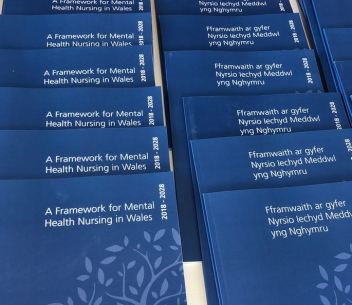
MHN FrameworkMeanwhile, on Mental Health Nurses’ Day, February 21st, here in Wales a new ten year Framework for Mental Health Nursing was launched at Cardiff University’s Hadyn Ellis Building. The Framework contains 13 pledges organised through four key themes: Professionalism, Voice and Leadership; Workforce and Education; Promoting Population Health and Wellbeing; and Quality and Safety of Care. It is also replete with exemplars of good practice.

One day after the Framework launch I was in the fine surroundings of the University of Birmingham for 2019’s first meeting of Mental Health Nurse Academics UK. A note of the event, which was attended by almost 50 people, can be found here. The meeting was a full one, with updates on both the REF and the TEF, experiences of course validation reflecting new NMC standards and more besides.

Introducing the MENLOC study

menloc logo 5A big part of my work this year is this recently funded evidence synthesis in the area of end of life care for people with severe mental illness. This is a cross-university study, supported by the National Institute for Health Research (NIHR) Health Services and Delivery (HS&DR) Research Programme, which also features service user researchers and a stakeholder advisory group populated by people with experience in both the mental health and end of life care fields.

Here, from our protocol, is a summary of what we’re up to:

The aim of this project is to synthesise relevant research and other appropriate evidence relating to the organisation, provision and receipt of end of life care for people with severe mental illness (including schizophrenia, bipolar disorder and other psychoses, major depression and personality disorder) who have an additional diagnosis of advanced, incurable, cancer and/or end-stage lung, heart, renal or liver failure and who are likely to die within the next 12 months.

Outputs from the project will be tailored to stakeholders, and clear implications will be drawn for the future commissioning, organisation, management and provision of clinical care. Recommendations will be made for future data-generating studies designed to inform service and practice improvements, guidance and policy.

In this context, summary objectives are to:

  1. locate, appraise and synthesise relevant research;
  2. locate and synthesise policy, guidance, case reports and other grey and non-research literature;
  3. produce outputs with clear implications for service commissioning, organisation and provision;
  4. make recommendations for future research designed to inform service improvements, guidance and policy.

This review will be conducted according to the guidance developed by the Centre for Reviews and Dissemination (CRD) and will be reported following the Preferred Reporting Items for Systematic Reviews and Meta-Analyses (PRISMA) statement recommendations. Reflecting Evidence for Policy and Practice Information (EPPI) Centre principles, opportunities will also be embedded into the project to maximise stakeholder engagement for the purposes of both shaping its focus and maximising its reach and impact.

Searches will be developed initially using Medical Subject Headings (MeSH) and text words across health, social care and psychology databases from their inception. In consultation with a stakeholder advisory group, supplementary methods will be developed to identify additional material including policies, reports, expert opinion pieces and case studies. All English language items relating to the provision and receipt of end of life care for people with severe mental illness and an additional diagnosis of advanced, incurable, cancer and/or end-stage lung, heart, renal or liver failure will be included. All included citations will be assessed for quality using tools developed by the Critical Appraisal Skills Programme (CASP), or alternatives as necessary if suitable CASP tools are not available. Data will be extracted into tables, and subjected to meta-analyses where possible or thematic synthesis with help from NVivo. Strength of synthesised findings will be reported where possible using GRADE and CerQual.

Information derived from the processes described above will be drawn on in an accessibly written summary. Uniquely, this synthesis will comprehensively bring together evidence on factors facilitating and hindering high-quality end of life care for people with severe mental illness, who have an additional diagnosis of advanced, incurable, cancer and/or end-stage lung, heart, renal or liver failure, and evidence relating to services, processes, interventions, views and experiences. Implications will be stated for the improvement of relevant NHS and third sector care and recommendations will be made for future research.

menlocRight now, having convened a first advisory group meeting, we’re busy searching and sifting for evidence mostly through reviewing citations identified in a series of comprehensive database searches. I’ll be posting more here as the study progresses, but for the detail a good place to go is here for the published protocol.

Coordinating mental health care

Hot on the heels of the publication of this paper from COCAPP, I’ve had two opportunities in recent weeks to present the content to (very select) groups, first at City, University of London and then at the South Wales Mental Health Nursing Journal Club and Seminar Group. Because I can, I thought to share the slides: so here they are, for anyone interested:

Plan4Recovery

Here’s a post introducing the main findings paper from the Plan4Recovery study, led by Michael Coffey and funded through a Health and Social Care Wales Social Care Research Award.

Plan4Recovery used qualitative and quantitative methods to investigate the relationships between recovery, quality of life, social support and shared decision-making amongst people using social care services in Wales. The project team included mental health researchers with practitioner backgrounds, experience of using services, and of mixed methods studies. The paper, published in the journal Social Psychiatry and Psychiatric Epidemiology, is in gold open access form which makes it free to download.

For a shortcut, here’s the abstract:

Purpose

Mental health care is a complex system that includes social care organisations providing support for people with continuing needs. The relationship over time between decisional conflict, social support, quality of life and recovery outcomes across two time periods for people experiencing mental health problems in receipt of social care was investigated.

Methods

This is a mixed methods study comprised of a quantitative survey at two time points using measures of decisional conflict, social support, recovery and quality of life in a random sample (n = 122) using social care services in Wales, UK. In addition, 16 qualitative case studies were developed from data collected from individuals, a supportive other and a care worker (n = 41) to investigate trajectories of care. Survey responses were statistically analysed using SPSS and case study data were thematically analysed.

Results

Participants reported increasing decisional conflict and decreasing social support, recovery and quality of life over the two time points. Linear regression indicated that higher recovery scores predict better quality of life ratings and as ratings for social support decline this is associated with lower quality of life. Correlational analysis indicated that lower decisional conflict is associated with higher quality of life. Thematic analysis indicated that ‘connectedness and recovery’ is a product of ‘navigating the system of care’ and the experience of ‘choice and involvement’ achieved by individuals seeking help.

Conclusions

These results indicate that quality of life for people experiencing mental health difficulties is positively associated with social support and recovery and negatively associated with decisional delay.

Observations from a small country

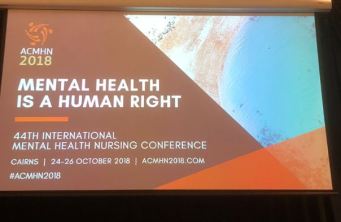
IMGP3076Here are two digital mementos from my trip to Australia: a photograph of a humpback whale (which breached and swam under the boat I was on for a good 45 minutes), and – more pertinently, perhaps, given the usual subject matter of this blog – the slides I used in my keynote talk at #ACMHN2018. This was the conference of the Australian College of Mental Health Nurses, held in Cairns in October 2018, and from which I have now returned home. My talk was all about mental health policy, services and nursing in Wales: which means this may actually be the only time I ever get to write about both ‘Wales’ and ‘whales’ in the same post.
Here are the slides, the material for which I’m also aiming write up as a paper:


#ACMHN2018

Big thanks to the Board of Directors of the Australian College of Mental Health Nurses (ACMHN) for inviting me to speak at the 44th International Mental Health Nursing Conference, or #ACMHN2018, which took place in Cairns between 24th-26th October 2018. Never having been to Australia before, and indeed having never before left Europe, this was a big deal and I was grateful for the opportunity.

The theme for the conference was ‘mental health as a human right’, and the three days opened with a memorable welcome to country given by Yidinji tribal elder Henrietta Marrie followed by music and dance. Keynote speakers reflected well the conference theme in their talks, variously focusing on tackling health inequalities (including amongst Aboriginal people), suicide prevention in LGBQTI communities, rural mental health, human rights progress in Ireland (and more). Concurrent presentations were also very high-quality. Worth noting, too, is how the ACMHN used its conference to raise awareness of its campaign, being run in concert with other health care organisations, to demand that children and families seeking asylum and currently being held on the island of Nauru be brought to Australia.

In my keynote I elected to speak about mental health policy, services and nursing in Wales and made the point that the Welsh approach to health care is different from that found elsewhere in the UK, or in other parts of the world. To illustrate this I spoke about the Mental Health (Wales) Measure, the introduction of both future generations and safe staffing legislation and the imminent appearance of a Framework for Mental Health Nursing prepared through the All Wales Senior Nurse Advisory Group for Mental Health.

I realise that in the UK we have nothing quite like the ACMHN: a professional organisation comprised of subscribing members, which represents its field, acts as a credentialing body (nursing education in Australia being a generalist one) and which lobbies for better services and higher standards. The College has a Board and an elected president, the current incumbent being Eimear Muir-Cochrane, and employs a team including Kim Ryan as salaried chief executive officer. The ACMHN performs no trade union function (like the RCN, Unite the Union, and Unison in the UK), and does not register or regulate nurses (as the NMC does). Australia looks to have a number of colleges and associations organised along the same lines as the ACMHN, and I’ve found this site which lists bodies advancing practice and representing members in the fields of critical care, midwifery, children and young people’s nursing, and more.

#ACMHN2018 was an excellent experience, and I was pleased to meet roomfuls of fine and interesting people. For the record, #ACMHN2019 takes place in Sydney between 8th-10th October 2019, with the theme of ‘integrated care’.